Georgian era contraband trade was far more than petty theft under moonlight — it was a structured, large-scale economic rebellion against the British crown’s taxation machine. Between the early 1700s and the 1830s, smuggling networks stretched from the Sussex coastline to London’s back-alley markets, moving tea, brandy, silk, and tobacco with military-like precision. This article unpacks the economic warfare embedded in Georgian era contraband trade, exploring how ordinary people, corrupt officials, and organized gangs collectively dismantled the state’s revenue system — and why their story still matters today.
Georgian era contraband trade and economic rebellion
The scale of Georgian era contraband trade was not incidental — it was a direct response to punishing customs duties that made legal goods unaffordable for most working households. Smuggling became the rational choice for communities squeezed between poverty and Parliament’s fiscal demands. Entire coastal villages in Sussex, Kent, and Dorset quietly organized themselves around the trade, treating it as legitimate commerce rather than crime.
How taxation created a black market economy
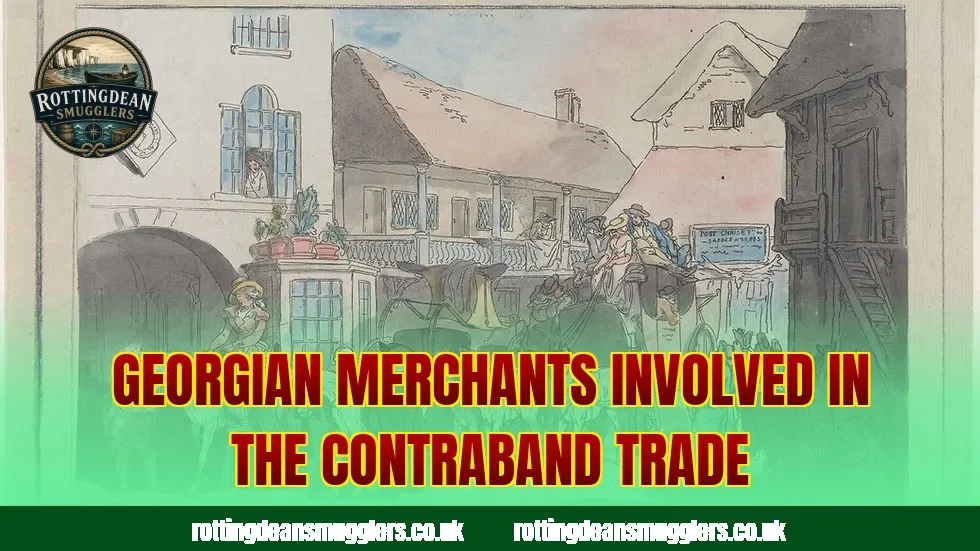
The British government’s reliance on excise duties throughout the 1700s created enormous price gaps between legal and contraband goods. Tea, for example, carried duties exceeding 100% at various points during the century, making smuggled tea not a luxury but a necessity for the working poor. Georgian era contraband trade flourished precisely because the tax system left consumers with almost no viable alternative to black market suppliers.
The role of organized gangs in supply chains
Groups like the Hawkhurst Gang in Kent operated with a sophistication that rivaled legitimate merchant networks — coordinating boats, horses, storage houses, and paid lookouts across county lines. These were not opportunistic criminals but businessmen responding to market demand created by government policy. The Georgian era contraband trade relied on vertical integration, with the same networks controlling procurement in France, transit across the Channel, and final distribution inland.
Community complicity and social normalization
Farmers offered their barns, innkeepers stored barrels, and clergymen occasionally looked the other way — community involvement was widespread and largely guilt-free. The moral framing of smuggling in Georgian England was fundamentally different from how the state portrayed it, with locals viewing the trade as resistance to unjust taxation rather than theft from the crown. Georgian era contraband trade thus became embedded in local identity, passed between generations as a practical tradition rather than a shameful secret.
Georgian era contraband trade tactics and methods
Understanding the mechanics of how goods moved during the Georgian era contraband trade reveals a level of operational intelligence that challenges any simplistic view of smuggling as disorganized crime. Routes were carefully mapped, timing was coordinated with tide tables, and counter-surveillance techniques evolved in direct response to customs enforcement pressure. The methods used were adaptive, regionally specific, and often technically impressive for their time.
Coastal landing points and hidden routes
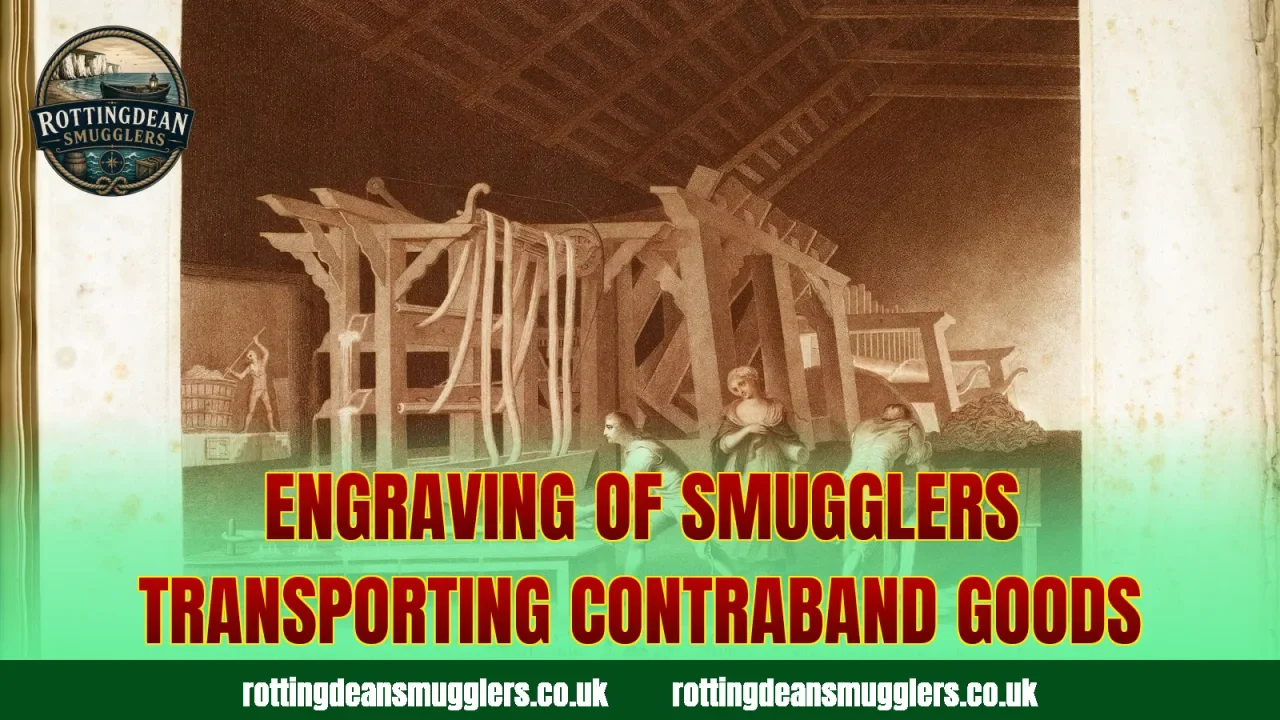
The Sussex coastline — particularly around Rottingdean, Cuckmere Haven, and Pevensey Bay — offered natural advantages that smugglers exploited with detailed local knowledge. Shallow-draft luggers could beach quickly, unload cargo within minutes, and return to sea before revenue cutters could respond. The Georgian era contraband trade depended heavily on geography, with each landing point connected to a web of inland paths, chalk tunnels, and sympathetic farm properties.
Disguise, deception, and counter-surveillance
Smugglers adopted elaborate disguises, used coded signals, and spread deliberate misinformation to mislead customs officers and informants. Some gangs employed decoy runs — sending empty boats along known patrol routes while the real cargo landed miles away undetected. Within the Georgian era contraband trade, counter-intelligence was not an afterthought but a core operational requirement that kept networks alive for decades.
Financial structures and profit distribution
Investment in smuggling runs was often syndicated, with local merchants, landowners, and tradesmen buying shares in a cargo and receiving proportional returns on delivery. This financial model spread both the risk and the reward across a broad cross-section of Georgian society, making suppression politically complicated. The Georgian era contraband trade was, in economic terms, a shadow investment market operating in parallel with legitimate commerce.
| Commodity | Typical duty rate (1700s) | Estimated smuggled volume | Primary landing regions |
|---|---|---|---|
| Tea | Up to 119% | ~7 million lbs/year (peak) | Sussex, Kent, Essex |
| Brandy | 60–80% | ~500,000 gallons/year | Dorset, Cornwall, Sussex |
| Silk | 30–50% | Significant but unquantified | Kent, London approaches |
| Tobacco | ~400% | ~1.5 million lbs/year | East Anglia, Thames estuary |
State response and the limits of enforcement
The British government’s attempts to suppress the Georgian era contraband trade reveal a consistent pattern of institutional failure, corruption, and strategic miscalculation that stretched across several administrations. Revenue officers were underpaid, outgunned, and frequently bribed — making enforcement more symbolic than effective for much of the century. The state’s eventual success in reducing smuggling came not from policing but from radical tax reform, most notably William Pitt the Younger’s Commutation Act of 1784.
Corruption within customs and excise services
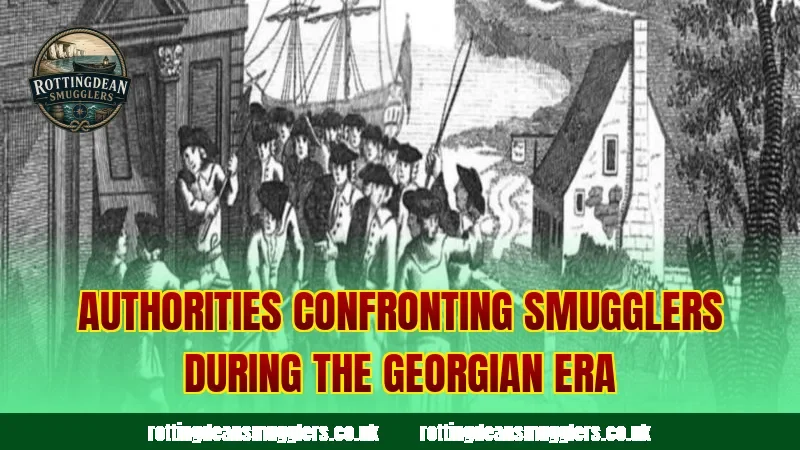
Customs officers along the southern coast were often complicit in the very trade they were hired to suppress, accepting bribes or simply avoiding confrontation with well-armed gangs. The structural incentive problem was clear — a customs officer earning a modest annual salary had little motivation to risk his life confronting a group of thirty armed men carrying contraband brandy. Georgian era contraband trade networks understood this dynamic and exploited it systematically, budgeting for bribery as a routine operational expense.
Military deployment and its limited impact
Parliament eventually authorized the deployment of dragoons and naval vessels to assist revenue enforcement, a measure that reflected the state’s recognition that civilian customs services had effectively lost control. Despite increased military presence along the coast, smuggling volumes remained high throughout the mid-eighteenth century because the underlying economic incentive — the massive duty differential — remained unchanged. The Georgian era contraband trade demonstrated that force alone cannot suppress a market sustained by structural economic imbalance.
The Commutation Act and the end of an era
William Pitt’s 1784 Commutation Act slashed tea duties from over 100% to around 12.5%, instantly eliminating the profit margin that had made smuggled tea commercially viable. The impact was dramatic and almost immediate — legal tea imports surged while smuggling volumes collapsed, proving that the Georgian era contraband trade had always been a market phenomenon rather than a cultural one. This policy lesson — that punitive taxation creates black markets — remains one of the most clearly documented examples in British economic history.
Legacy, culture, and historical significance today
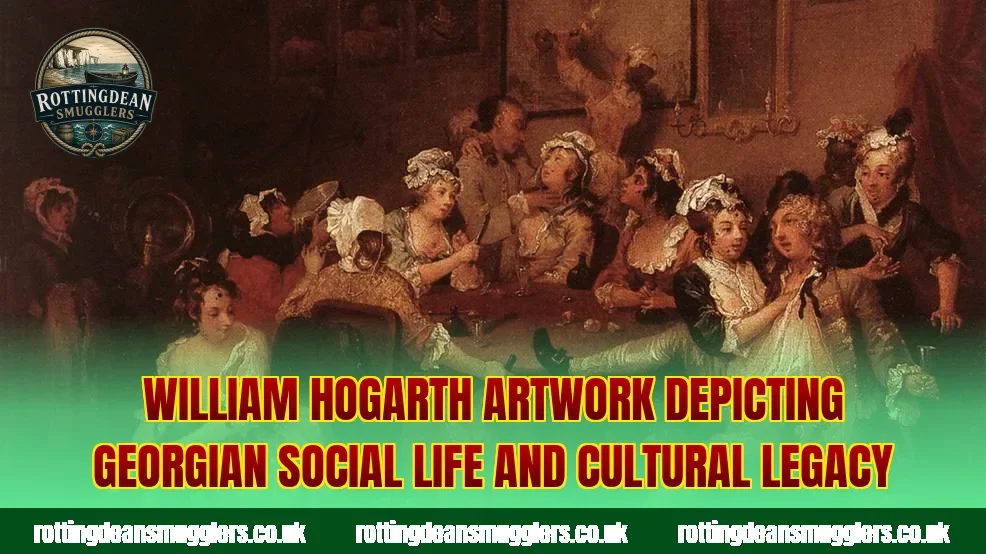
The memory of Georgian era contraband trade has proven remarkably durable in British coastal culture, surviving in place names, folk songs, local legends, and museum collections across the south of England. What began as economic necessity has been transformed into cultural heritage, with communities like Rottingdean celebrating their smuggling past as a defining part of local identity. Historians now recognize the trade not as a footnote but as a significant chapter in the broader story of British economic and social development.
How smuggling shaped coastal community identity
Villages that once depended on contraband runs now draw heritage tourism from the same history that once brought revenue officers to their doors — the inversion is striking and commercially significant. Local museums, walking tours, and historical societies have invested considerable effort in documenting the networks, personalities, and methods of the Georgian era contraband trade with academic seriousness. The result is a body of local history that challenges romanticized portrayals while acknowledging the genuine complexity of why people smuggled.
Academic reassessment and economic history
Economic historians have increasingly framed the Georgian era contraband trade as a case study in the unintended consequences of fiscal policy, drawing parallels to modern debates about prohibition, drug markets, and tariff regimes. The data from this period — imperfect as it is — provides compelling evidence that consumer demand does not disappear when governments tax goods heavily; it simply migrates to informal supply chains. This reframing has elevated smuggling from colorful criminality to serious economic analysis.
Rottingdean’s place in the contraband story
Rottingdean, a quiet village on the East Sussex coast, sits at the intersection of documented smuggling history and living community memory — its chalk cliffs and hidden paths were active corridors for contraband movement throughout the Georgian period. The village’s connection to the Georgian era contraband trade is well-documented in court records, customs seizure logs, and local oral history, making it one of the most historically rich sites for understanding how the trade actually operated at ground level. Visitors today can trace the physical landscape that smugglers navigated by night, giving the history a tangible, immediate quality that no archive alone can provide.
Conclusion
Georgian era contraband trade was economic warfare conducted by communities against a tax system they considered unjust, and its legacy endures in both policy scholarship and coastal heritage. The story is not simply one of crime — it is a detailed record of how markets, communities, and states interact when fiscal pressure exceeds what people will tolerate. To explore this history through one of its most documented local chapters, visit Rottingdean Smugglers and discover how this Sussex village lived at the center of England’s most defiant underground economy.
See also: Old maritime smuggling records UK — Court papers and historical documentation from England’s smuggling era.