History of tea smuggling UK is one of the most dramatic chapters in British social history, stretching across two centuries of defiance, danger, and desperate trade. When the British government imposed crippling taxes on tea imports during the 1700s, ordinary people turned to criminal networks to satisfy their daily craving for a cup of brew. What followed was a nationwide underground economy that touched every coastal village, back-alley tavern, and country estate across England.
History of tea smuggling UK and its dark origins
The roots of this illicit trade run deep into the economic policies of 18th-century Britain. Understanding where it began helps explain why so many ordinary citizens became willing participants in a criminal enterprise that spanned entire coastlines.
How taxation sparked a nation of criminals
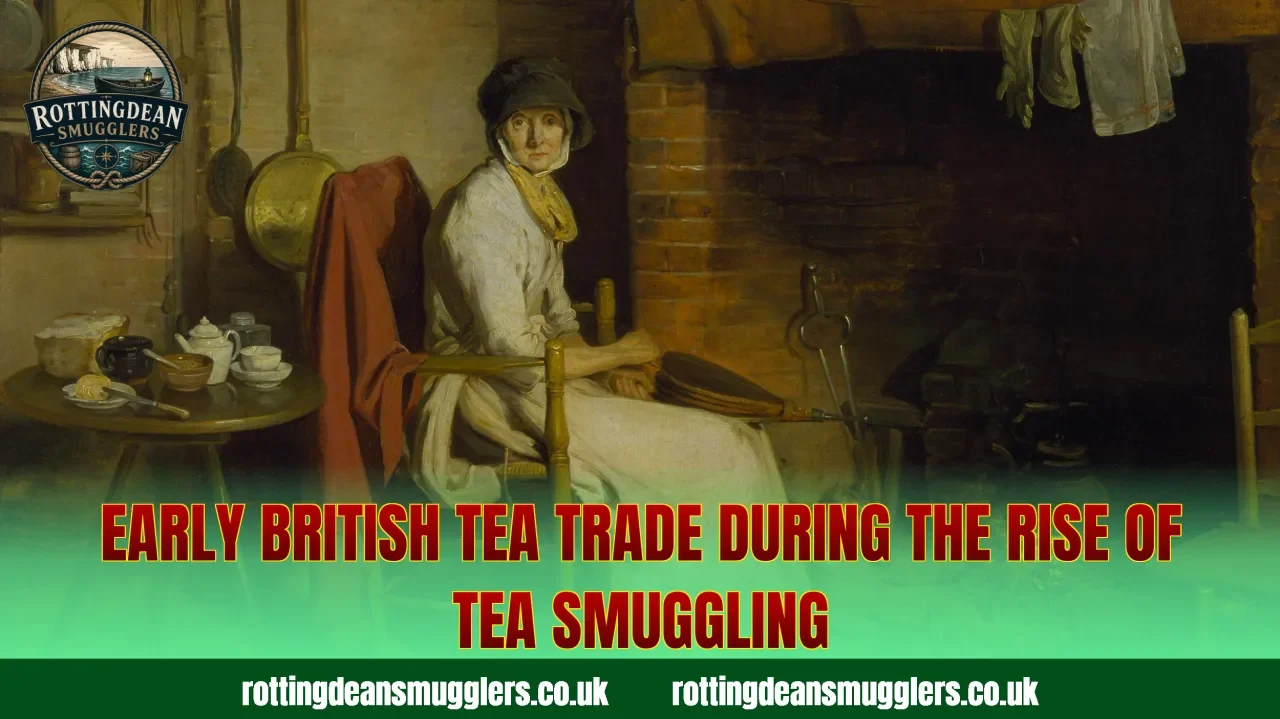
The history of tea smuggling UK truly begins in 1689, when Parliament first levied heavy duties on imported tea. By the mid-1700s, taxes had climbed so steeply that the legal price of tea became unaffordable for most working-class families. Smugglers stepped in to fill that gap, offering the same leaves at a fraction of the cost and building a shadow economy that rivalled the legitimate trade in scale.
The East India Company’s unintended consequence
The East India Company held a monopoly on legal tea imports, which artificially inflated prices and left consumers with little choice. Merchants in Holland and France were selling the same Chinese teas at far lower rates, making cross-Channel smuggling not just tempting but financially irresistible. This monopoly, combined with punishing tariffs, essentially handed the criminal networks their most powerful recruitment tool.
When half the nation drank illegal tea
Historians estimate that by the 1750s, more than half of all tea consumed in England had been smuggled into the country illegally. The history of tea smuggling UK during this period reveals a society where breaking the law had become a quiet act of everyday survival. Even clergymen, magistrates, and members of the gentry were known to purchase contraband leaves without a second thought.
History of tea smuggling UK: the gangs who ruled
Behind every illicit cargo was an organised criminal network with the muscle and the money to move goods across hundreds of miles of coastline. These gangs were not petty thieves but sophisticated operations that commanded loyalty through fear and profit.
The Hawkhurst Gang and their reign of terror
The history of tea smuggling UK produced no more feared organisation than the Hawkhurst Gang, who dominated the Sussex and Kent coastlines throughout the 1740s. They operated openly, carrying arms, bribing customs officers, and murdering anyone who dared to inform against them. Their eventual downfall came only after a series of brutal public killings that finally forced the government to act with genuine force.
Coastal villages as willing accomplices
Entire fishing communities along the Sussex coast, from Hastings to Brighton, were deeply embedded in the smuggling trade. Local farmers lent their horses, innkeepers stored the goods, and blacksmiths repaired the equipment — all in exchange for a share of the profits. The social fabric of these villages was inseparable from the contraband economy that sustained them through harsh winters and poor harvests.
The role of women in moving contraband
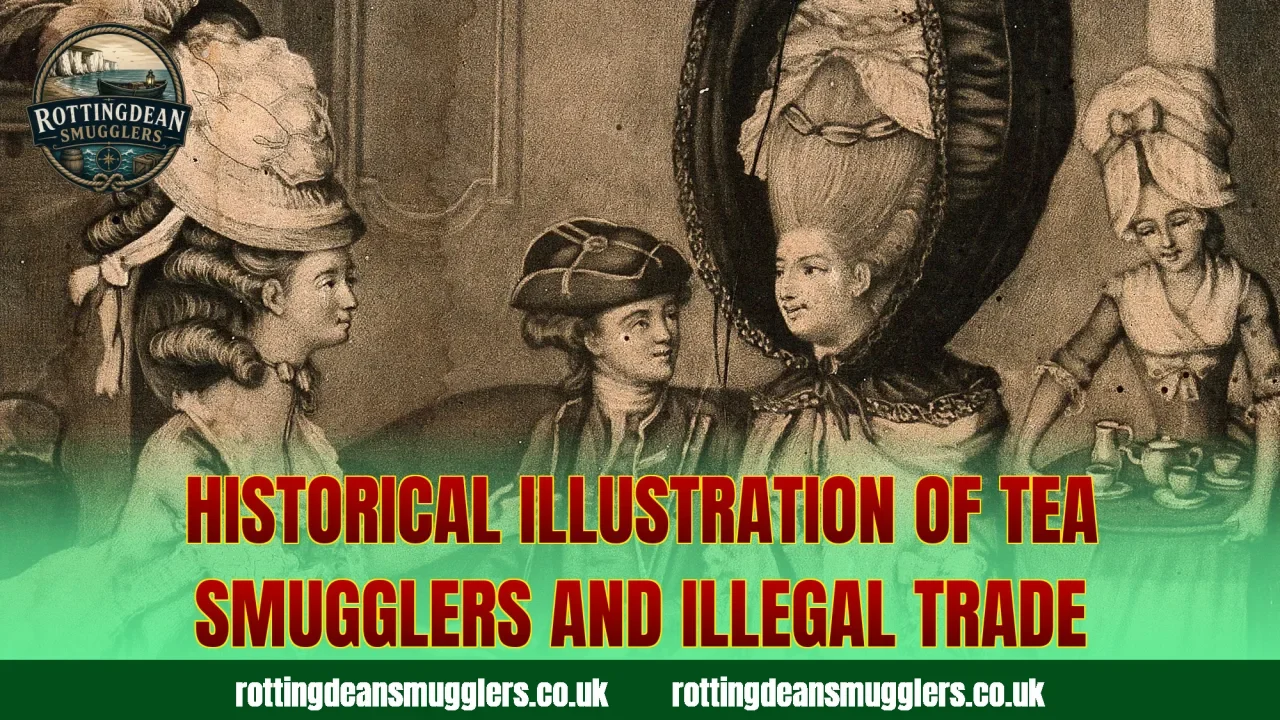
Women played a surprisingly active role in the underground tea trade, often using their clothing and domestic spaces to hide and transport illegal goods. They sewed tea into specially designed undergarments, concealed packages beneath floorboards, and acted as lookouts when Revenue Men patrolled nearby streets. Their participation has been largely overlooked by history, yet without them the distribution networks would have collapsed far sooner.
Methods, routes, and the art of evasion
Moving thousands of pounds of contraband tea across open water and through guarded ports required ingenuity, local knowledge, and nerves of iron. The smugglers developed techniques that were remarkably sophisticated for their era.
Moonlit landings and hidden coves
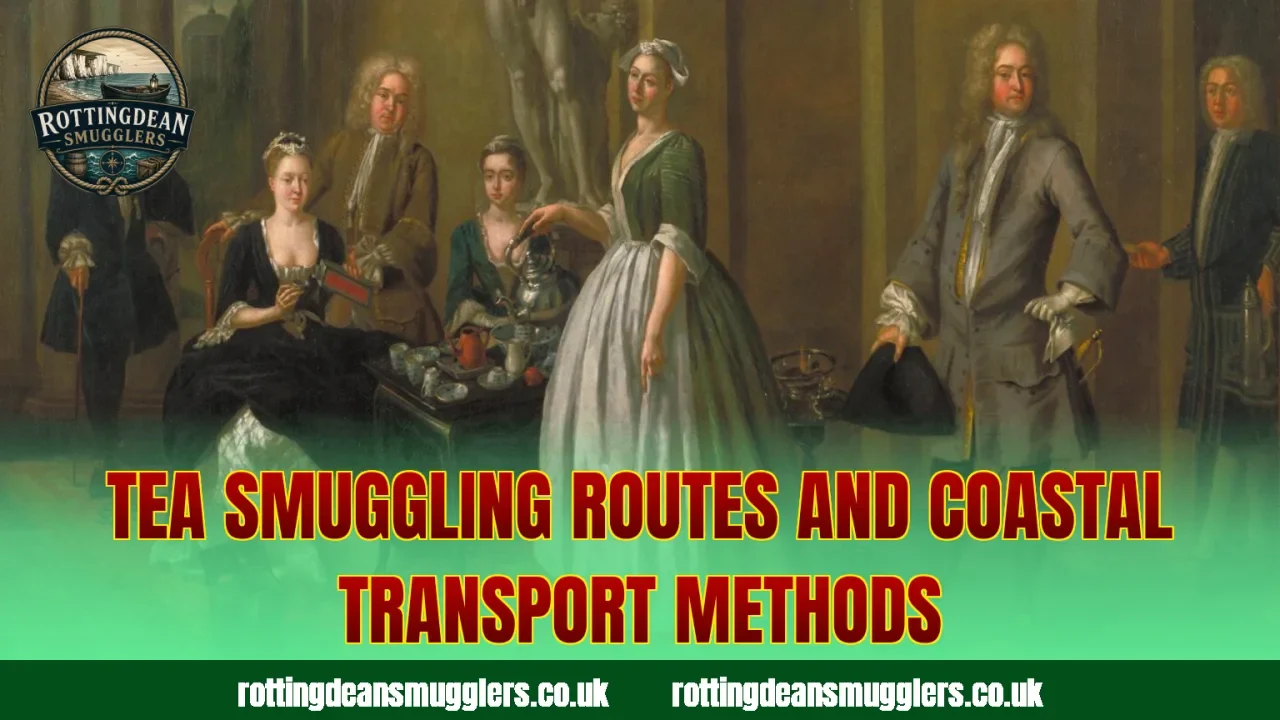
Smugglers preferred moonless nights and incoming tides to land their cargoes on remote beaches far from customs posts. The history of tea smuggling UK is filled with accounts of coordinated landings where dozens of men would appear from the darkness, unload a vessel in under an hour, and vanish into the countryside before dawn. Locations like Rottingdean, Birling Gap, and Cuckmere Haven became notorious landing points precisely because of their natural concealment.
Tunnels, cellars, and secret hiding places
Once the goods reached shore, they needed to disappear quickly into a network of pre-arranged storage sites. Smugglers used church crypts, inn cellars, hollow walls, and underground tunnels to cache their contraband until it was safe to move further inland. Many of these hiding places remained undiscovered for decades, and some were only revealed during building renovations centuries later.
The Riding Officers and their impossible task
The government deployed Riding Officers along the coast to intercept smuggled goods, but these men were hopelessly outnumbered and frequently outbribed. A single smuggling gang could field fifty armed men against one lone officer patrolling miles of open coastline. The history of tea smuggling UK shows that official enforcement remained largely ineffective until the Commutation Act of 1784 finally changed the economic incentives that drove the trade.
A timeline of key events in the smuggling era
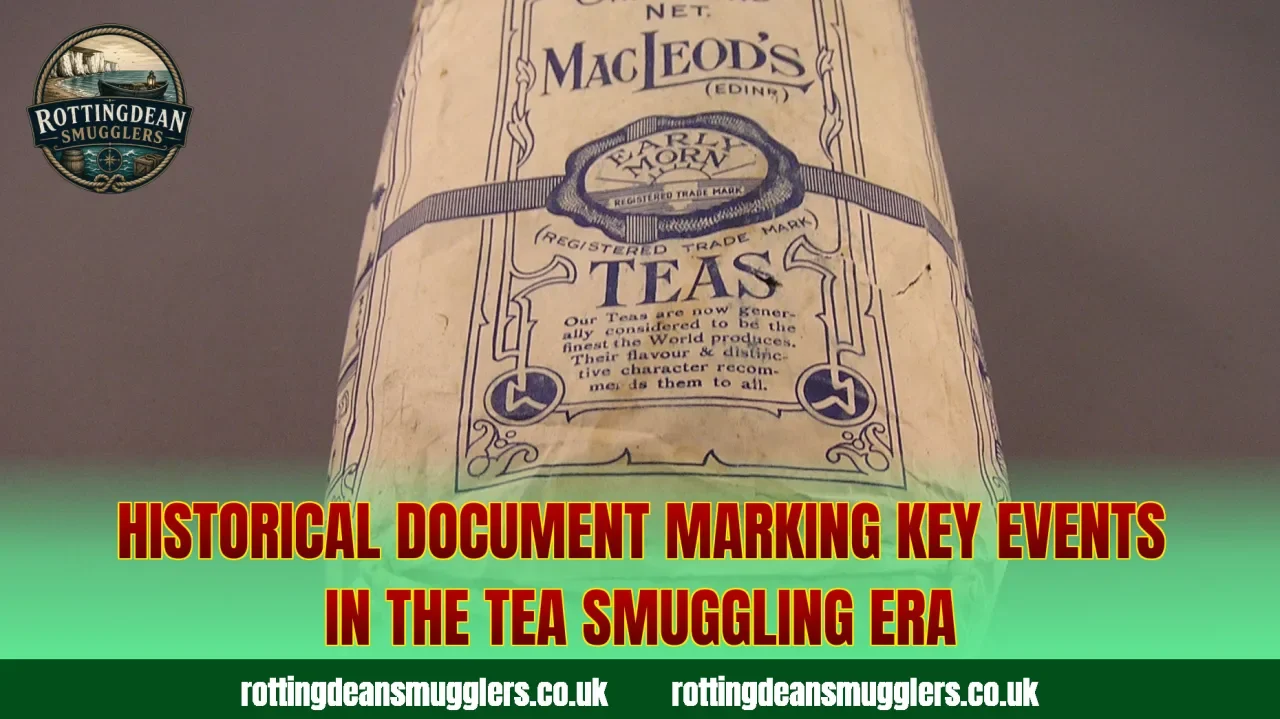
The following table outlines the major turning points that shaped the rise and eventual decline of Britain’s underground tea trade across the 18th century.
| Year | Event | Significance |
|---|---|---|
| 1689 | First tea duties introduced | Sparked the early smuggling networks along southern coasts |
| 1720s | Hawkhurst Gang formed | Became the most violent and organised smuggling operation in England |
| 1747 | Poole Customs House raid | Triggered a series of murders and the gang’s eventual destruction |
| 1749 | Hawkhurst Gang broken up | Leaders executed; marked a turning point in government enforcement |
| 1784 | Commutation Act passed | Slashed tea duties by 119%, making smuggling economically unviable |
| 1800s | Coastguard Service established | Provided systematic enforcement that finally ended large-scale operations |
The Commutation Act and the trade’s slow death
No single piece of legislation did more to end Britain’s contraband tea economy than the Commutation Act of 1784. By drastically reducing import duties, Prime Minister William Pitt the Younger removed the price gap that had made smuggling so profitable for over a century.
William Pitt’s masterstroke against the smugglers
Pitt recognised that enforcement alone would never solve the problem, so he attacked the economic logic that sustained it. When legal tea became affordable, the history of tea smuggling UK entered its terminal phase, as ordinary consumers no longer needed to seek out illegal suppliers. Within a decade of the Act’s passage, the volume of contraband tea entering Britain had fallen dramatically, and many of the old smuggling networks simply dissolved.
The Coastguard and the final crackdown
The establishment of a professional Coastguard Service in the early 19th century provided the systematic enforcement that previous governments had never managed to deliver. Coordinated patrols, signal stations, and fast revenue cutters made the risky business of landing contraband far more dangerous than it had ever been before. The combination of lower taxes and stronger enforcement finally closed the chapter that the history of tea smuggling UK had opened more than a hundred years earlier.
A legacy carved into the landscape
Even after the trade collapsed, its physical traces remained embedded in the coastline and the communities that had once depended on it. Tunnels beneath old inns, hollowed-out cliff faces, and the names of local landmarks all carry quiet reminders of the contraband era. The history of tea smuggling UK left behind a cultural memory that still draws visitors to Sussex villages in search of hidden passages and forgotten stories.
Conclusion
History of tea smuggling UK stands as a remarkable story of economic rebellion, community solidarity, and the unintended consequences of bad taxation policy. It shaped the coastlines, the communities, and the character of southern England in ways that are still visible today. If this hidden world of contraband and courage intrigues you, explore the full story with Rottingdean Smugglers and discover the real history beneath the cliffs.
Xem thêm: Historical smuggling hiding places – Secret caves