Flintlock pistols used by smugglers were among the most feared weapons along England’s southern coastline during the 18th century. These compact, reliable firearms gave smuggling gangs a deadly edge against customs officers and rival crews alike. From hidden coves in Sussex to the chalk cliffs of Rottingdean, the flintlock pistol became a defining symbol of the smuggler’s dangerous trade.
Flintlock pistols used by smugglers: Deadly tools of the trade
Understanding why smugglers favoured flintlock pistols requires a look at both the weapons themselves and the violent world these men inhabited. These pistols were not merely decorative — they were working tools carried into genuine danger night after night.
Why smugglers chose the flintlock design
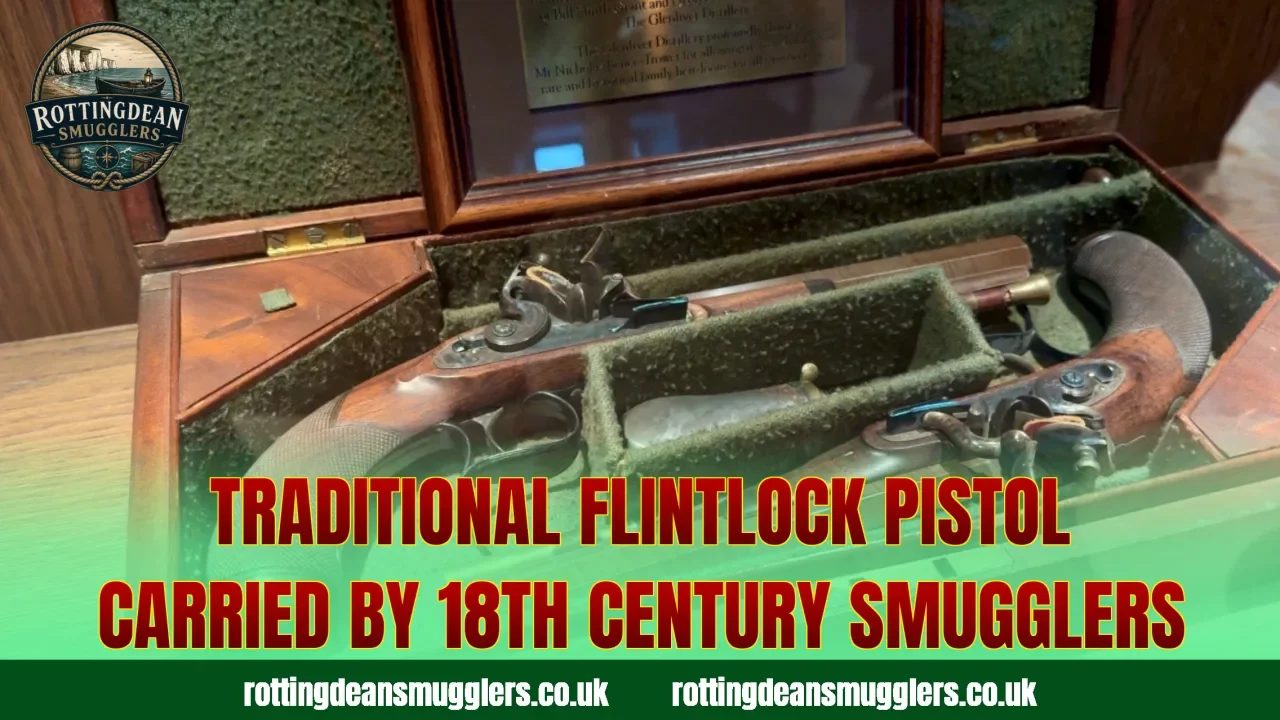
Flintlock pistols used by smugglers offered a practical combination of reliability and compactness that suited clandestine operations perfectly. Unlike heavier muskets, a flintlock pistol could be tucked into a belt, hidden beneath a coat, or stowed quickly in a saddlebag without drawing attention. The flintlock ignition mechanism, which used a sharpened flint striking a steel frizzen to produce a spark, was well understood by most men of the era and required minimal specialist maintenance in the field.
The mechanical advantage of flint ignition
The flintlock mechanism gave smugglers a meaningful tactical advantage over slower, more cumbersome matchlock weapons that were still in limited use during the early 1700s. A well-maintained flintlock pistol could be primed and ready to fire within seconds, which mattered enormously during surprise encounters on dark beaches. The spark produced by flint against steel ignited a small charge of black powder in the pan, which in turn fired the main charge and propelled a lead ball at lethal velocity. Flintlock pistols used by smugglers were typically carried in pairs, allowing a man to fire twice before needing to reload.
Calibre, barrel length, and stopping power
Most smuggler-carried pistols were of a relatively large calibre, commonly between .60 and .75 inches, which ensured devastating stopping power at close range. Barrel lengths varied considerably, with shorter-barrelled “Queen Anne” style pistols proving especially popular for concealment during landings. Flintlock pistols used by smugglers were often privately purchased rather than issued, meaning individual weapons varied widely in quality, with some men carrying fine London-made pieces while others relied on cheaper Birmingham trade pistols.
How flintlock pistols shaped smuggling gang tactics
The widespread adoption of flintlock pistols fundamentally changed how smuggling gangs operated along the English coast, shifting the balance of power in ways that alarmed government authorities for decades.
Armed escorts and the “tubmen” system
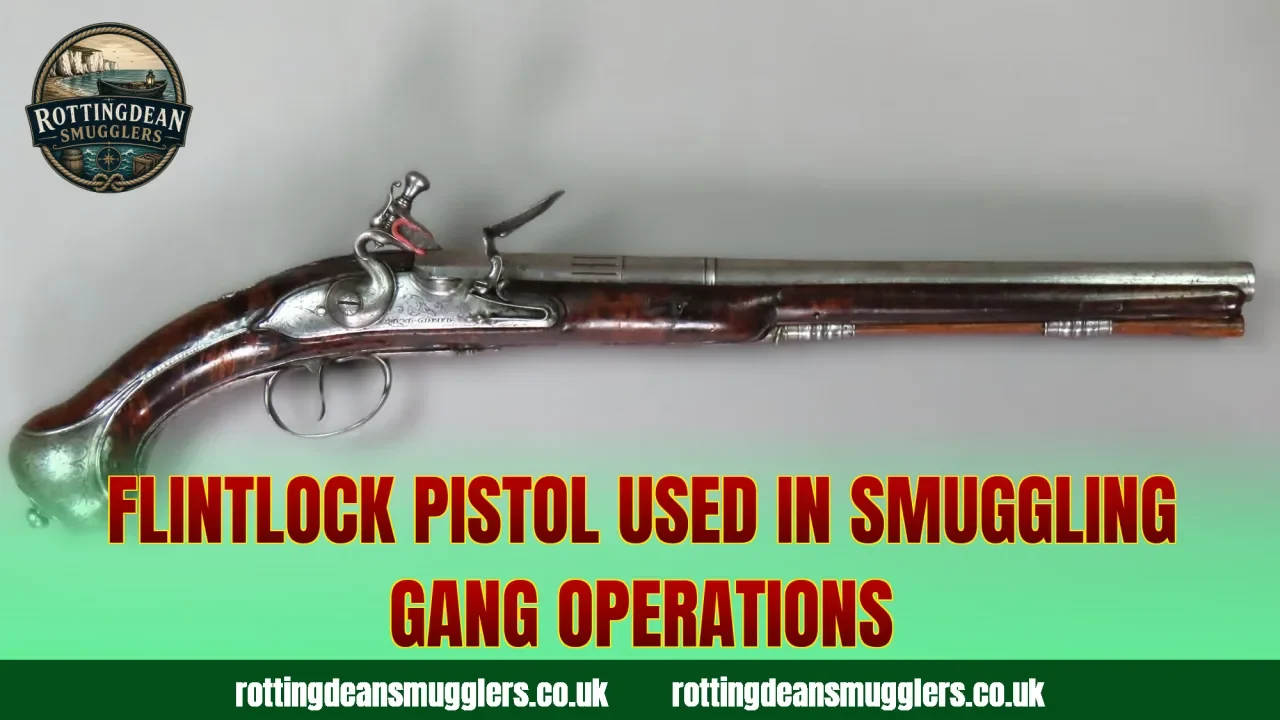
Flintlock pistols used by smugglers were central to the organised protection systems that large gangs developed to move contraband inland safely. Armed riders known as “batmen” or “owlers” would escort columns of “tubmen” — the carriers who physically transported kegs of brandy, bales of tea, and rolls of lace — through the countryside at night. Each batman typically carried at least one flintlock pistol and often a carbine as well, forming a moving armed guard that few excise officers were willing to challenge alone. The Hawkhurst Gang, one of the most notorious smuggling organisations of the 1740s, routinely deployed dozens of armed men on a single run.
Confrontations with revenue officers
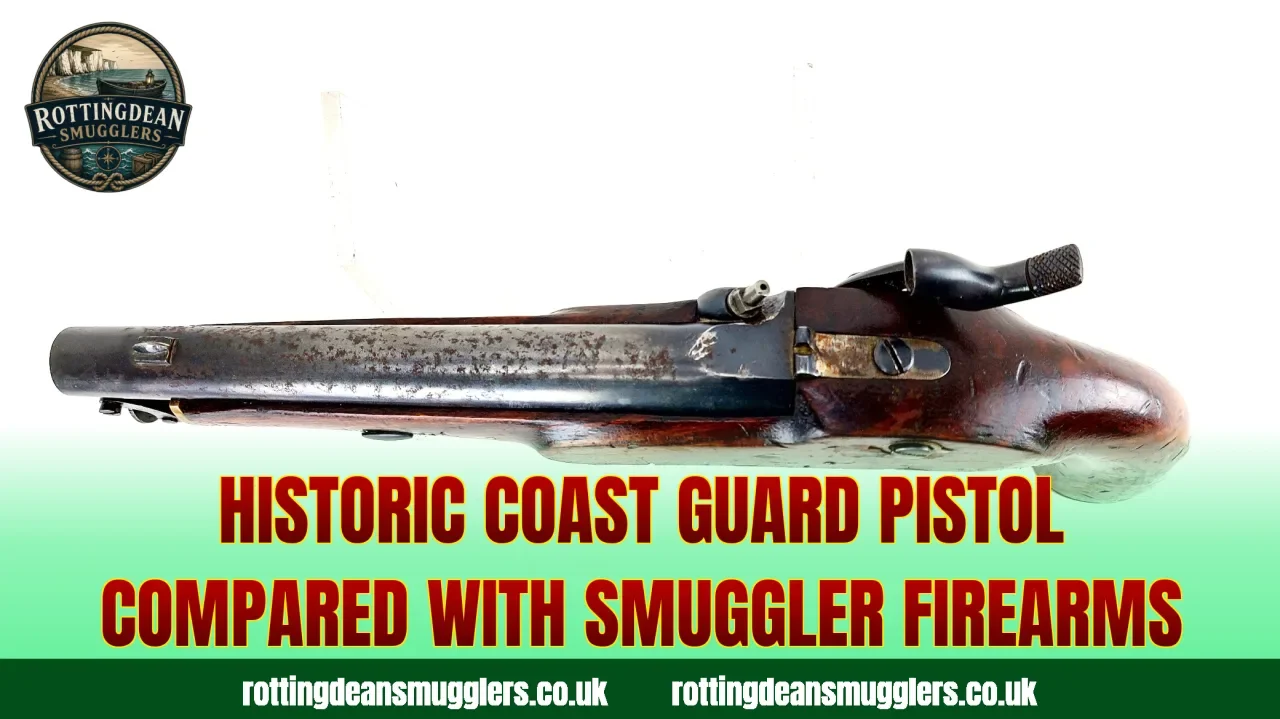
Revenue men and customs officers were frequently outgunned during this period, which is why the government eventually created the Riding Officers and later the Blockade Service. Flintlock pistols used by smugglers appeared in numerous documented confrontations, including the infamous Goudhurst Raid of 1747, where the Hawkhurst Gang openly threatened an entire village. When smugglers did fire their weapons, the wounds inflicted by large-calibre flintlock pistol balls were often fatal or permanently disabling, which gave gangs a fearsome reputation that itself served as a deterrent. Many revenue officers chose to look the other way rather than risk their lives for a modest government salary.
Signalling, intimidation, and psychological warfare
Beyond direct combat, flintlock pistols used by smugglers served important psychological and signalling functions during runs. A pistol fired into the air could alert lookouts stationed on clifftops that a landing was underway or that danger was approaching from an unexpected direction. The mere visible presence of armed men was often enough to deter interference from locals who might otherwise have reported activity to the authorities. In communities like Rottingdean, where smuggling was deeply embedded in local economic life, the sight of armed tubmen moving through the village at night was simply accepted as a fact of coastal existence.
Notable flintlock types carried during the smuggling era
Not all flintlock pistols were equal, and the type of weapon a smuggler carried often reflected his status within the gang, his personal wealth, and the specific role he played in operations.
| Pistol type | Typical barrel length | Common calibre | Primary use by smugglers |
|---|---|---|---|
| Queen Anne pistol | 4–6 inches | .56–.62 | Concealed carry during landings |
| Cavalry-style pistol | 9–12 inches | .65–.75 | Mounted escort duty, armed runs |
| Trade pistol (Birmingham) | 6–9 inches | .60–.70 | General purpose, widely available |
| Blunderbuss pistol | 6–8 inches (flared) | Multi-shot scatter | Close-quarters defence on boats |
| Pocket pistol | 2–4 inches | .44–.54 | Hidden backup weapon, leadership |
The Queen Anne pistol: A smuggler’s favourite
The Queen Anne pistol, with its elegant screw-off barrel and compact frame, was particularly well suited to the needs of men who needed to stay inconspicuous. Flintlock pistols used by smugglers of this pattern could be loaded from the breech rather than the muzzle, making the process faster and somewhat easier in poor weather or cramped conditions. Many surviving examples show signs of heavy practical use rather than decorative ownership, with worn grips and replaced flints pointing to weapons that saw genuine service rather than sitting in a gentleman’s cabinet.
Cavalry pistols and their role in armed escorts
Longer cavalry-pattern flintlock pistols gave mounted smugglers greater range and accuracy than shorter pocket pieces, making them the weapon of choice for batmen riding alongside contraband convoys. Flintlock pistols used by smugglers of this type were sometimes captured military surplus weapons or copies of military patterns produced by civilian gunsmiths. Their heavier ball and longer barrel meant they could deliver effective fire at distances of twenty to thirty yards, far beyond what a revenue officer armed with a shorter weapon could reliably match. This range advantage reinforced the tactical dominance that well-armed gangs enjoyed over underprepared customs patrols.
Blunderbuss pistols for close-quarters boat defence
On the water, where distances were short and a single shot needed to count immediately, the blunderbuss pistol variant offered a spread of shot that compensated for the difficulty of aiming accurately from a moving vessel. Flintlock pistols used by smugglers in blunderbuss form were loaded with multiple small balls or even scrap metal, turning each shot into a lethal close-range blast. Revenue cutters attempting to board smuggling luggers at night faced men armed with these weapons, which explains why boarding actions were so often bloody and fiercely contested. The psychological effect of a blunderbuss being levelled at close quarters was, by most historical accounts, immediate and persuasive.
Conclusion
Flintlock pistols used by smugglers were far more than weapons — they were instruments of economic survival, gang authority, and territorial control along England’s most lawless coastlines. The firepower these pistols provided allowed organised gangs to operate with near impunity for much of the 18th century, shaping the social and economic history of coastal communities from Kent to Cornwall. To explore the full story of armed smuggling culture in Sussex, visit Rottingdean Smugglers and discover the real history behind the legends.
Xem thêm: Smugglers lantern types – Secret night signals