Smugglers tunnels under English pubs are among the most fascinating hidden chapters in British history, connecting centuries-old trade secrets to the charming village inns that still stand today. These subterranean passages were carved out by resourceful smugglers who used the cellars of local taverns as cover for moving contraband goods like brandy, silk, and tobacco. From the chalk cliffs of Sussex to the cobbled streets of Kent, evidence of these underground networks continues to surface beneath some of England’s oldest drinking establishments.
Smugglers tunnels under English pubs: A hidden history
The story beneath England’s oldest pubs runs far deeper than their foundations. Generations of innkeepers quietly cooperated with smuggling rings, offering their cellars and secret passages as vital links in an underground supply chain that stretched from the coast to inland villages.
How tunnels were built beneath historic taverns
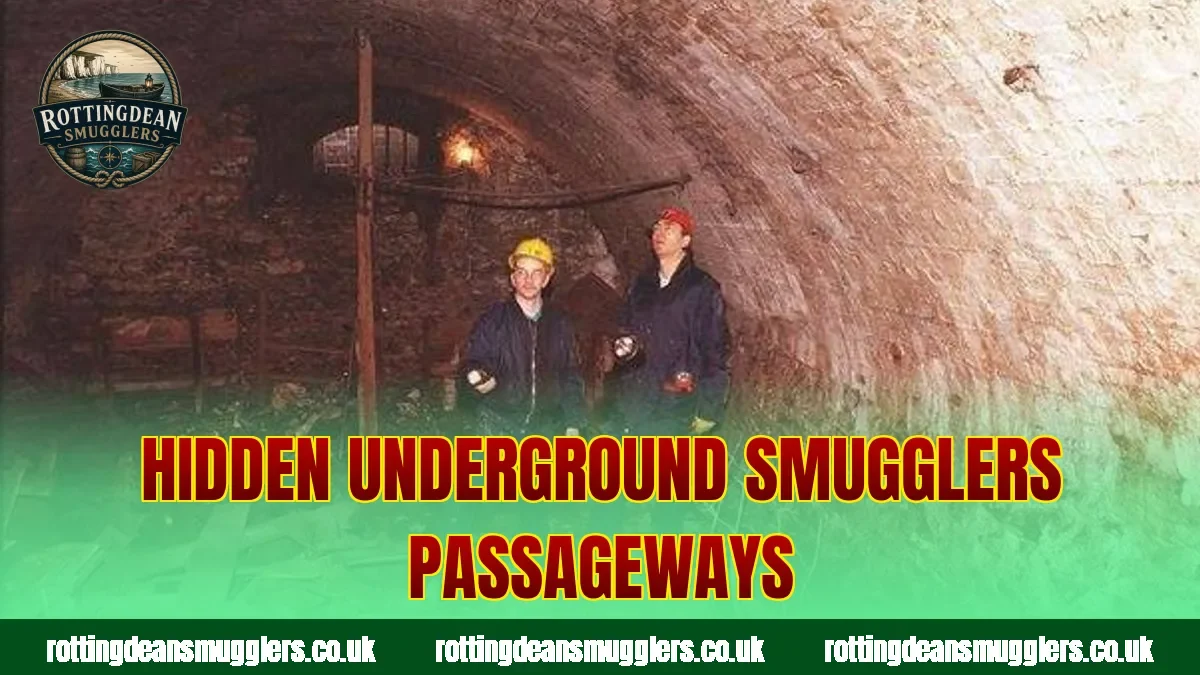
Smugglers tunnels under English pubs were rarely dug overnight — they were carefully constructed over years, often expanding existing chalk or sandstone cavities that naturally formed beneath old buildings. Smugglers employed local laborers who knew how to work in silence and secrecy, shoring up walls with timber and brick to prevent collapse. The entrances were disguised behind false fireplaces, hidden trapdoors, or movable wine racks, making detection by customs officers almost impossible.
The role of landlords in coastal smuggling rings
Many pub landlords were not passive bystanders — they were active participants in one of England’s most profitable black-market operations. A trusted innkeeper could store barrels of untaxed French brandy for weeks before distribution, collecting a cut of the profits in return. The smugglers tunnels under English pubs gave these landlords plausible deniability, since goods could move in and out without ever appearing above ground.
Geographic hotspots across southern England
Sussex, Kent, Devon, and Cornwall were the most active regions for tunnel networks due to their proximity to France and their rugged, easily hidden coastlines. Villages like Rottingdean, Rye, and Polperro became synonymous with free trading, and nearly every old pub in these areas carries at least a rumor of a hidden passage. The smugglers tunnels under English pubs in these counties are now well-documented through archaeological surveys and local historical records.
Smugglers tunnels under English pubs discovered recently
New discoveries continue to emerge as renovation projects and ground surveys uncover passages that have been sealed for centuries. Each find adds another layer to our understanding of how deeply organized the smuggling trade had become across rural England.

Notable tunnel finds during pub renovations
Several high-profile discoveries have made headlines in recent years, particularly in Sussex and Kent where pub owners uncovered bricked-up doorways leading to brick-lined passages beneath their floors. In some cases, smugglers tunnels under English pubs were found to stretch hundreds of meters, connecting the cellar of one inn to the back of a churchyard or a private home nearby. These finds are not just architectural curiosities — they are tangible evidence of a coordinated underground economy.
Archaeological evidence and dating methods
Historians and archaeologists have used ceramic fragments, iron bottle seals, and dendrochronology on timber supports to date many of these passages to the late 17th and early 18th centuries — the peak era of English smuggling. Residue analysis of stone surfaces has even detected traces of tobacco, tea, and alcohol in tunnel walls. The physical evidence found in smugglers tunnels under English pubs consistently matches documentary records from the period, lending significant credibility to local legends that were once dismissed as folklore.
How local communities preserve these discoveries
Many villages now incorporate their tunnel histories into heritage tourism, offering guided walks, underground tours, and museum exhibitions that attract thousands of visitors each year. Local historical societies work alongside English Heritage to document and protect newly discovered passages before they are inadvertently destroyed by construction. The cultural value embedded in smugglers tunnels under English pubs has become a genuine economic driver for coastal communities across southern England.
What contraband moved through these secret passages
Understanding what smugglers actually transported helps explain why such elaborate infrastructure was worth building and maintaining. The financial stakes were enormous, and the tunnel networks reflect the scale of goods that changed hands beneath English soil.

| Contraband Type | Origin | Estimated Duty Avoided | Peak Period |
|---|---|---|---|
| French brandy | Normandy, Brittany | Up to 60% of retail value | 1700–1780 |
| Silk and lace | Flanders, France | Up to 30% of retail value | 1680–1750 |
| Tobacco | Virginia via Dutch ports | Up to 400% markup on taxed price | 1720–1800 |
| Tea | China via Continental Europe | Duties exceeded 100% at peak | 1730–1784 |
| Playing cards | France, Netherlands | Small but consistent margin | 1710–1760 |
Brandy, silk, and the economics of evasion
French brandy was the single most profitable contraband item carried through smugglers tunnels under English pubs, simply because the duty imposed on spirits was so high that smuggled goods could be sold at half price and still generate enormous margins. Silk and fine lace were less bulky and easier to conceal, making them ideal secondary cargo for smaller tunnel operations. Together, these luxury goods funded entire criminal enterprises that operated with military-level precision and loyalty codes that rivaled any formal organization.
Tea smuggling and the Customs crackdown
At the height of the tea tax in the 1750s and 1760s, it is estimated that more than half of all tea consumed in England was smuggled — much of it passing through the smugglers tunnels under English pubs along the south coast. The Commutation Act of 1784 slashed tea duties so dramatically that legal trade became competitive overnight, effectively ending large-scale tea smuggling within a generation. Even so, the tunnel infrastructure remained in use for other goods long after the tea trade normalized.
The gangs who controlled the underground trade
Organized gangs like the Hawkhurst Gang in Kent operated with such dominance that they openly threatened magistrates, Revenue men, and anyone who dared inform against them. These groups maintained the smugglers tunnels under English pubs as private logistics networks, appointing specific tunnel keepers and lookouts to manage each section of the route. Their operations were so embedded in local society that entire parishes looked the other way, viewing smuggling as a legitimate form of economic resistance against unjust taxation.
Conclusion
Smugglers tunnels under English pubs represent far more than a romantic footnote in British folklore — they are physical proof of a sophisticated, community-wide resistance to taxation that shaped coastal culture for over a century. From hidden brandy cellars to miles-long chalk passages, these discoveries continue to rewrite our understanding of everyday life in Georgian England. To explore the most authentic accounts of this hidden world, visit Rottingdean Smugglers and step into the real story beneath the surface.
Xem thêm: Smugglers Contraband Goods History | Rottingdean Smugglers