Excise men weapons 1700s shaped one of the most dangerous law enforcement roles in British history. These officers patrolled coastlines and smuggling routes armed with specific tools designed for close-quarters confrontation. Excise men weapons 1700s ranged from flintlock pistols to cavalry swords, each chosen for a practical purpose in the field. Understanding their arsenal reveals how seriously the Crown took the smuggling crisis along the southern English coast.
Excise men weapons 1700s: the full arsenal
The combat gear carried by excise officers was far more varied than most history books suggest. These men were not soldiers, yet they faced organized gangs that frequently outnumbered them. Their weapons had to be reliable, portable, and effective in both open terrain and tight coastal alleyways.

Flintlock pistols and their battlefield role
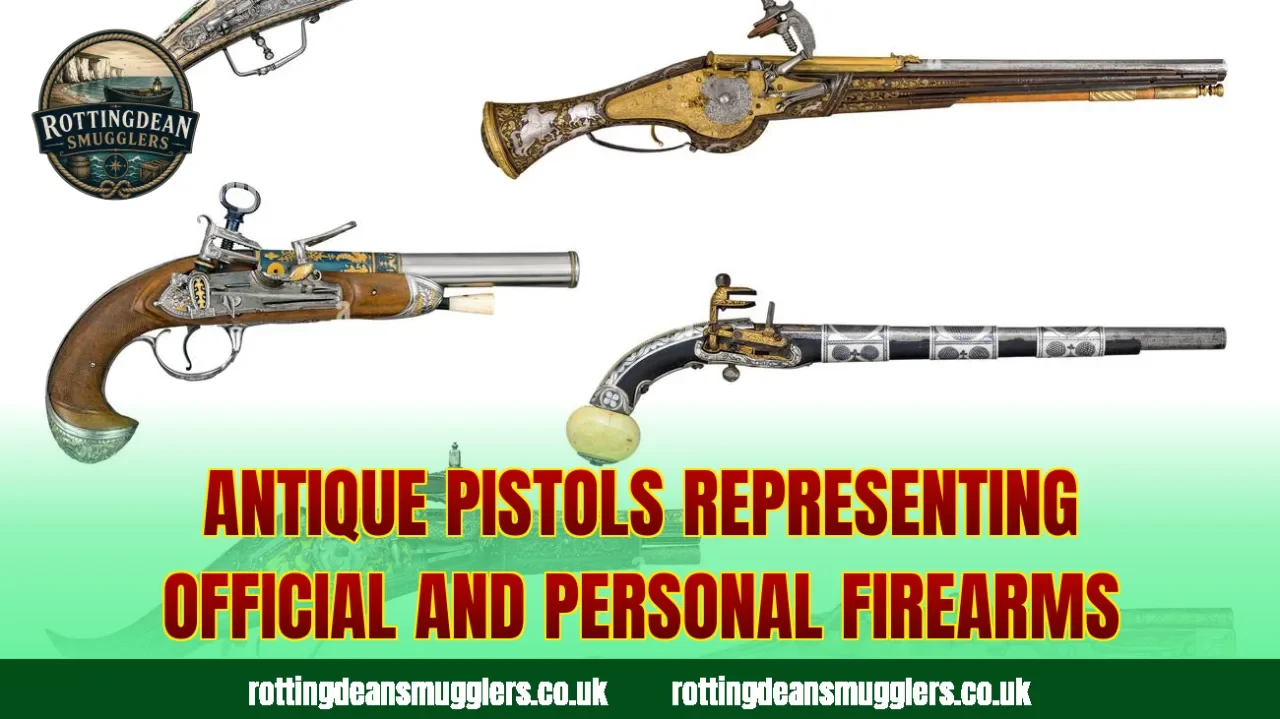
Excise men weapons 1700s almost always included the flintlock pistol as the primary sidearm. Officers typically carried a brace of pistols — two loaded weapons worn on a belt or in saddle holsters — allowing a second shot without reloading. The flintlock mechanism was prone to misfiring in wet coastal weather, which made maintenance a constant concern for riding officers patrolling the Sussex and Kent shorelines.
Carbines and muskets for open terrain
When excise patrols anticipated resistance from larger smuggling gangs, they carried short-barreled carbines suited for mounted use. The carbine offered greater range than a pistol while remaining manageable on horseback. Excise men weapons 1700s issued through official channels were often military surplus, meaning officers sometimes carried the same firearms used by dragoon regiments during earlier campaigns.
Edged weapons: swords and cutlasses
Bladed weapons were essential once powder and shot were spent. Riding officers favored the hanger, a short curved sword ideal for slashing in close combat without requiring great reach. The excise men weapons 1700s inventory also included naval-style cutlasses for waterguard officers who boarded suspect vessels, where the confined spaces of a ship’s hold made longer blades impractical and dangerous.
Excise men weapons 1700s: official issue vs personal
Not every officer received identical equipment from the Crown. The Board of Customs and the Board of Excise had separate procurement systems, which created inconsistencies in what individual officers actually carried. Some men supplemented their issued gear with privately purchased weapons when they felt the standard issue was inadequate for the threats they faced.
What the Crown officially provided officers
Official records from the early 1700s confirm that riding officers were typically issued a carbine, two pistols, and a sword upon appointment. The excise men weapons 1700s standard kit also included a pair of handcuffs, a warrant card, and a riding crop — the latter being more administrative than combative. Replacement weapons were available through regional customs houses, though the process was slow and bureaucratic.
Personal weapons officers chose themselves
Many officers invested in higher-quality private pistols from London gunsmiths, trusting their personal purchases over government-issued arms. Excise men weapons 1700s carried by experienced officers often included pocket pistols for concealed use during undercover operations in coastal taverns and warehouses. A well-worn personal blade was considered more reliable than a freshly issued sword that had never been tested in actual combat.
Non-lethal tools and restraint equipment
Beyond firearms and blades, officers used wooden truncheons to subdue suspects without drawing blood in public settings. The truncheon carried an official crown marking, serving both as a weapon and a symbol of legal authority. Excise men weapons 1700s kits were therefore a mix of lethal force and civil restraint tools, reflecting the dual role these officers played as both law enforcers and revenue collectors.
How smugglers forced officers to adapt tactics
The Hawkhurst Gang and similar organized smuggling operations in the 1730s and 1740s demonstrated that individual excise officers were dangerously outmatched. These gangs moved in groups of fifty or more, carried their own firearms, and were not afraid to use extreme violence against revenue men. The brutal murder of customs officer William Galley in 1748 shocked the public and forced a rethink of how officers were equipped and deployed.

Military support and dragoon reinforcement
Following several high-profile attacks on excise patrols, the government began assigning dragoon cavalry units to assist revenue officers along the most dangerous stretches of coastline. This meant that excise men weapons 1700s were now supplemented by military-grade firepower, including cavalry sabers and flintlock carbines carried by trained soldiers. The presence of dragoons significantly changed the tactical balance, though smugglers responded by shifting to faster nighttime runs and smaller decentralized groups.
Waterguard vessels and deck armaments
Revenue cutters patrolling coastal waters were fitted with swivel guns and small cannons to intercept smuggling luggers at sea. The officers aboard these vessels had access to excise men weapons 1700s that went far beyond personal sidearms, including boarding pikes and grappling hooks used to bring suspect vessels alongside. Naval-trained waterguard officers were among the best-equipped revenue men of the era, operating in an environment where the threat of violence was constant and immediate.
Informant networks as a tactical weapon
Not all weapons were physical. Excise officers increasingly relied on paid informants embedded within smuggling communities to gather intelligence before raids. This intelligence-led approach reduced the need for direct armed confrontation, allowing officers to plan ambushes where their limited numbers and excise men weapons 1700s could be used to maximum effect. The combination of informant networks and armed patrols became the most effective counter-smuggling strategy of the mid-eighteenth century.
Weapons, law, and the Hovering Act
The legal framework governing how excise officers could use force evolved significantly during the 1700s. Early in the century, officers had limited authority to discharge weapons without facing legal consequences. The Hovering Act of 1718 and subsequent legislation gave revenue men broader powers to stop, search, and if necessary use lethal force against those actively resisting arrest while carrying contraband.

| Weapon type | Typical user | Primary purpose | Effective range |
|---|---|---|---|
| Flintlock pistol | Riding officer | Close-range defense | 10–20 meters |
| Carbine | Mounted patrol officer | Medium-range engagement | 50–80 meters |
| Hanger sword | Riding officer | Close-quarters combat | Melee only |
| Cutlass | Waterguard officer | Boarding and ship defense | Melee only |
| Truncheon | All excise officers | Non-lethal restraint | Melee only |
| Swivel gun | Revenue cutter crew | Vessel interdiction | 100–200 meters |
Legal consequences of using force
Even with expanded powers, excise officers faced serious legal scrutiny if they killed or seriously wounded a suspect. Courts expected officers to demonstrate that force was necessary and proportionate. Excise men weapons 1700s were therefore carried with an awareness that their use could trigger an inquest, a coroner’s hearing, or even a criminal trial against the officer himself. This legal pressure shaped how and when officers chose to draw their weapons in the field.
Rewards, risks, and officer mortality
The Crown offered financial rewards to officers who successfully seized large contraband shipments, but the personal risks were severe. Several riding officers were killed in ambushes during the peak smuggling years of the 1730s and 1740s. Excise men weapons 1700s provided some protection, yet no amount of armament fully compensated for being outnumbered ten to one on a dark Sussex beach with no backup within miles.
The decline of armed confrontation after 1750
Stricter penalties introduced by the Revenue Act of 1745 made large-scale armed smuggling increasingly unsustainable. Gangs that had once operated openly began to fragment, and the frequency of violent clashes between officers and smugglers dropped noticeably. Excise men weapons 1700s remained standard issue through the end of the century, but the era of pitched battles between revenue men and organized gangs had effectively ended by the 1760s as enforcement strategies matured and penalties became more severe.
Conclusion
Excise men weapons 1700s tell the story of a forgotten frontline in British legal history, where underpaid officers faced organized violence with limited support. Their arsenal — from flintlock pistols to naval cutlasses — reflected both the dangers they encountered and the resourcefulness they needed to survive. For a deeper look at the world these officers policed, explore the full history at Rottingdean Smugglers and discover the real stories behind the contraband trade.
Xem thêm: 18th century sailing luggers – The fastest ships