18th century sailing luggers were among the most agile and feared vessels ever built for coastal waters. These swift, multi-masted ships dominated English Channel trade routes, smuggling operations, and naval skirmishes alike. What made them so fast, so versatile, and so difficult to catch? This article explores their design secrets, historical roles, and lasting legacy on Britain’s maritime history.
18th century sailing luggers: Speed, design, and dominance
The story of 18th century sailing luggers begins with their unique sail configuration, which gave them a decisive edge over heavier naval vessels. Their lugsails allowed rapid tacking and superior performance in shallow coastal waters, making them nearly impossible to intercept. Understanding their construction reveals why they remained the vessel of choice for smugglers and privateers throughout the 1700s.

The lugsail rig that changed coastal sailing
18th century sailing luggers were defined by their distinctive lugsail rig, where large quadrilateral sails were suspended from yards set at an angle to the mast. This arrangement generated exceptional power even in moderate winds, allowing the vessel to outpace customs cutters with ease. The rig required fewer crew members than square-rigged ships, reducing operating costs while maintaining remarkable speed across open water.
Hull shape built for shallow-water speed
The hull design of these vessels was deliberately shallow and wide, enabling them to navigate inshore waters where larger naval ships could not follow. Shipwrights in Kent, Sussex, and Cornwall refined the hull lines over decades to reduce drag and improve directional stability. This shallow draught meant a lugger could beach directly on a shingle shore, unload contraband within minutes, and disappear before revenue officers arrived.
Crew size and tactical advantages at sea
A typical vessel of this class carried between ten and thirty men, depending on whether it was fitted for trade or armed conflict. The relatively small crew size gave captains flexibility in dangerous situations, allowing quick course changes and sudden retreats into shallow anchorages. These tactical advantages made 18th century sailing luggers the preferred tool of smuggling gangs operating along the Sussex and Kent coastlines throughout the Georgian era.
18th century sailing luggers in smuggling operations
Smuggling networks in Georgian England relied almost entirely on fast, reliable watercraft to move contraband across the Channel without detection. No vessel suited this purpose better than the lugger, which combined speed, cargo capacity, and coastal agility in one practical design. The following sections examine how these ships were used, armed, and organised within the broader smuggling economy of the 1700s.
Running contraband across the English Channel
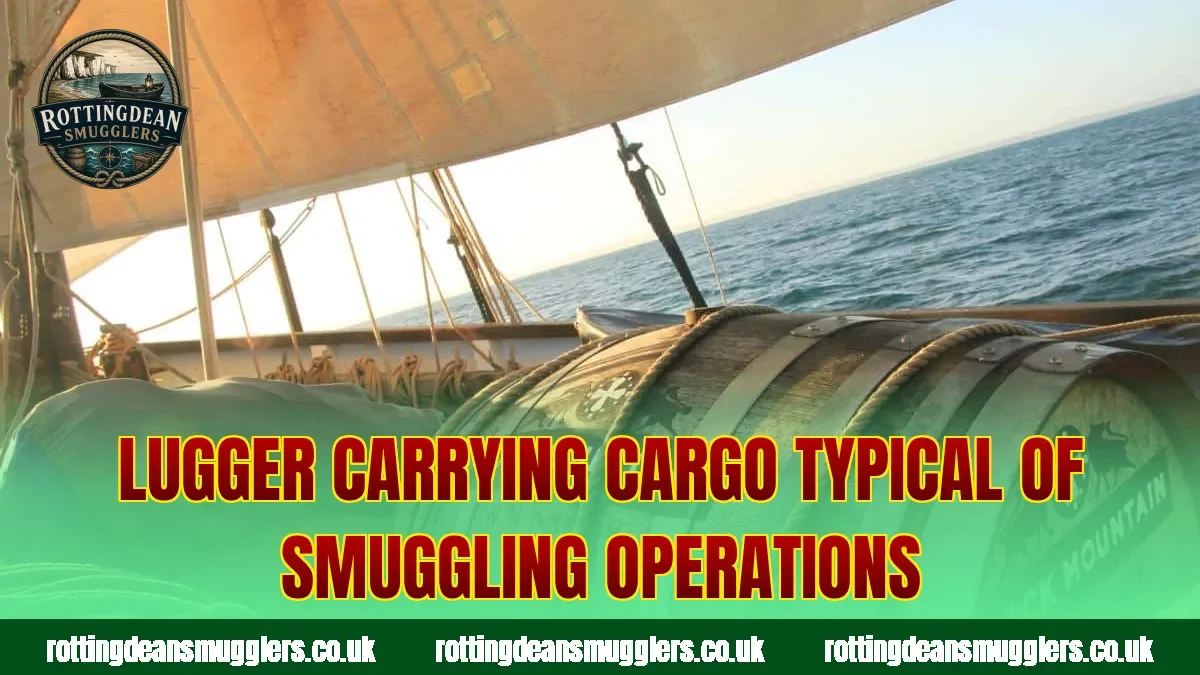
18th century sailing luggers regularly made the crossing between French ports like Boulogne and Dunkirk and the English coast in under twelve hours under favourable winds. They carried tea, brandy, silk, and tobacco — all heavily taxed goods that generated enormous profits when landed illegally. The speed of the crossing was critical, as longer voyages increased the risk of interception by Royal Navy patrol vessels stationed in the Channel.
Armed luggers and confrontations with excise men
Many luggers operating during this period were heavily armed, carrying swivel guns, small cannon, and muskets to deter or overpower revenue officers attempting to board them. Confrontations between armed smuggling crews and excise men were not uncommon along the Sussex coast, and several resulted in casualties on both sides. The firepower carried by these vessels reflected the high financial stakes involved in large-scale contraband operations during the eighteenth century.
Organised gangs and their fleet of vessels
Criminal organisations such as the Hawkhurst Gang operated multiple 18th century sailing luggers simultaneously, creating coordinated supply chains that moved goods from French suppliers to inland distributors across southern England. These gangs employed local fishermen, farmers, and tradesmen as part-time crew members, building networks that were difficult for authorities to dismantle. The sheer scale of these operations demonstrated just how central the lugger had become to the illegal economy of coastal Britain.
Naval use and wartime roles of luggers
Beyond smuggling, these fast coastal vessels played a significant role in official naval operations throughout the eighteenth century. The British Admiralty recognised their speed and shallow draught as valuable assets for reconnaissance, dispatch work, and inshore patrol duties. Their wartime contributions offer a different perspective on vessels that are most often remembered for their criminal associations.
Dispatch and reconnaissance missions for the navy
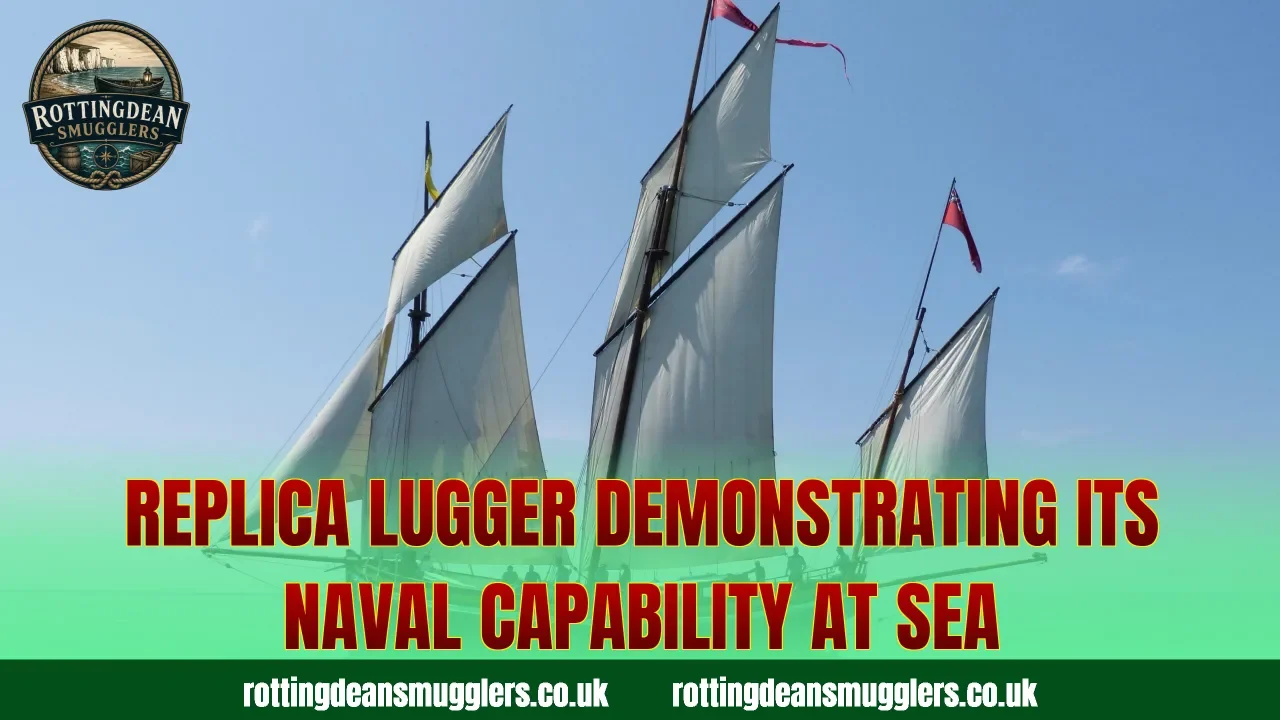
18th century sailing luggers were frequently commissioned by the Royal Navy to carry urgent dispatches between fleet commanders and shore-based admiralty offices. Their speed made them far more reliable than larger brigs or sloops for time-sensitive communications during active campaigns. Several luggers served with distinction during the American Revolutionary War and the Napoleonic Wars, carrying intelligence that influenced major strategic decisions at sea.
Privateering and letters of marque
During wartime, private citizens could legally attack enemy merchant shipping by obtaining letters of marque from the Crown, and many chose luggers as their vessel of preference. The combination of speed, shallow draught, and relatively low crew requirements made them ideal for hit-and-run privateering tactics against slower merchant convoys. Some privateers operating 18th century sailing luggers accumulated considerable wealth through prize money, blurring the line between legitimate warfare and outright piracy.
Revenue cutters versus luggers: An arms race at sea
As smuggling profits grew, the British government invested in faster revenue cutters specifically designed to intercept luggers along the coastline. This created a genuine maritime arms race, with shipbuilders on both sides constantly refining hull designs and sail plans to gain speed advantages. Despite these efforts, 18th century sailing luggers continued to outmanoeuvre government vessels well into the nineteenth century, a testament to the excellence of their original design.
| Feature | 18th century sailing luggers | Revenue cutters | Naval sloops |
|---|---|---|---|
| Average length | 40–70 feet | 50–80 feet | 60–100 feet |
| Crew size | 10–30 men | 20–40 men | 30–60 men |
| Sail type | Lugsail rig | Gaff cutter rig | Square rig |
| Draught | Very shallow | Moderate | Deep |
| Primary use | Smuggling, dispatch, privateering | Revenue enforcement | Naval patrol and warfare |
| Speed advantage | Excellent inshore | Good offshore | Moderate overall |
The lasting legacy of Georgian coastal vessels
The influence of these remarkable ships extended far beyond the eighteenth century, shaping later vessel designs and leaving a permanent mark on British maritime culture. Their story is preserved in local histories, maritime museums, and the oral traditions of coastal communities that once depended on them. Examining their legacy helps us understand how a single vessel type could transform both criminal enterprise and legitimate naval operations across an entire era.
Influence on later fishing and working boats
18th century sailing luggers directly influenced the design of nineteenth-century fishing vessels across Cornwall, Devon, and the East Anglian coast. The lugsail rig remained a standard feature of British inshore fishing boats well into the twentieth century, valued for its simplicity and effectiveness in variable coastal conditions. Boat builders who had learned their craft constructing smuggling vessels carried that knowledge forward into entirely legitimate commercial fishing enterprises.
Cultural memory in coastal communities
Villages along the Sussex coast, including Rottingdean, Seaford, and Hastings, still carry strong folk memories of the smuggling era and the vessels that made it possible. Local legends, pub names, and historical societies keep alive the stories of bold crews who risked imprisonment or transportation to bring contraband ashore under cover of darkness. These cultural memories transformed 18th century sailing luggers from criminal tools into romantic symbols of coastal resistance and self-reliance.
Maritime museums and surviving vessel records
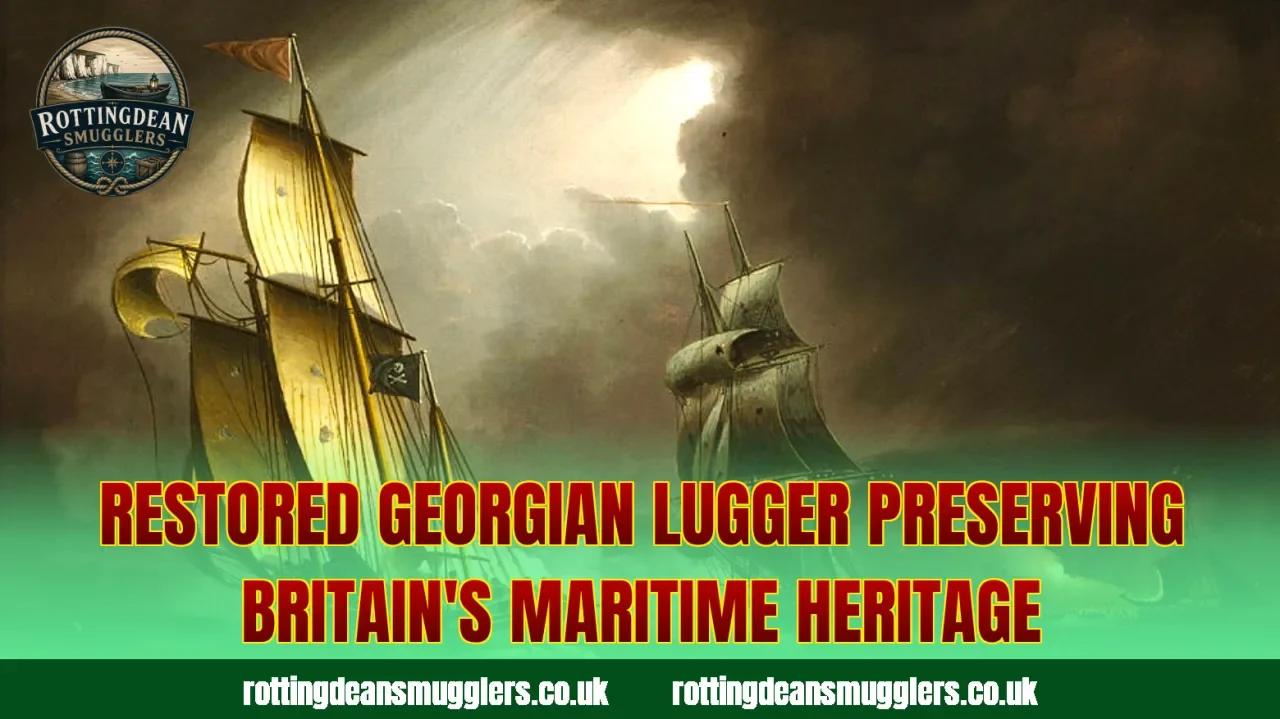
While no complete original lugger from the 1700s survives in seaworthy condition, maritime museums across Britain hold detailed plans, models, and contemporary illustrations that document their construction. The National Maritime Museum in Greenwich and several regional collections preserve records of specific vessels, their owners, and their operational histories. These archives allow historians and enthusiasts to reconstruct with confidence exactly how 18th century sailing luggers were built, rigged, and sailed during their remarkable period of dominance.
Conclusion
18th century sailing luggers stand as one of the most significant vessel types in British maritime history, combining speed, versatility, and coastal mastery in a design that served smugglers, privateers, and naval commanders alike. Their story is inseparable from the wider history of Georgian England’s coastline, where law, commerce, and crime intersected on the water every night. To explore this history further, visit Rottingdean Smugglers and discover the remarkable stories of the people and ships that shaped Britain’s smuggling era.
See more: Excise men weapons 1700s – Combat gear revealed