Bloody Code 18th century smuggling shaped one of the most violent chapters in English legal history. During this era, smugglers faced execution for crimes that modern law would treat as minor offences. The tension between brutal punishment and widespread public sympathy created a paradox that defined coastal communities for generations. This article explores how the Bloody Code functioned, why it failed to stop smuggling, and what it reveals about power, poverty, and resistance in Georgian England.
Bloody Code 18th century smuggling and the law
The legal landscape of 18th-century England was defined by severity above all else. Lawmakers believed that the threat of death would deter criminal behaviour, yet the evidence suggests the opposite was true in smuggling communities.
Origins of the Bloody Code in England
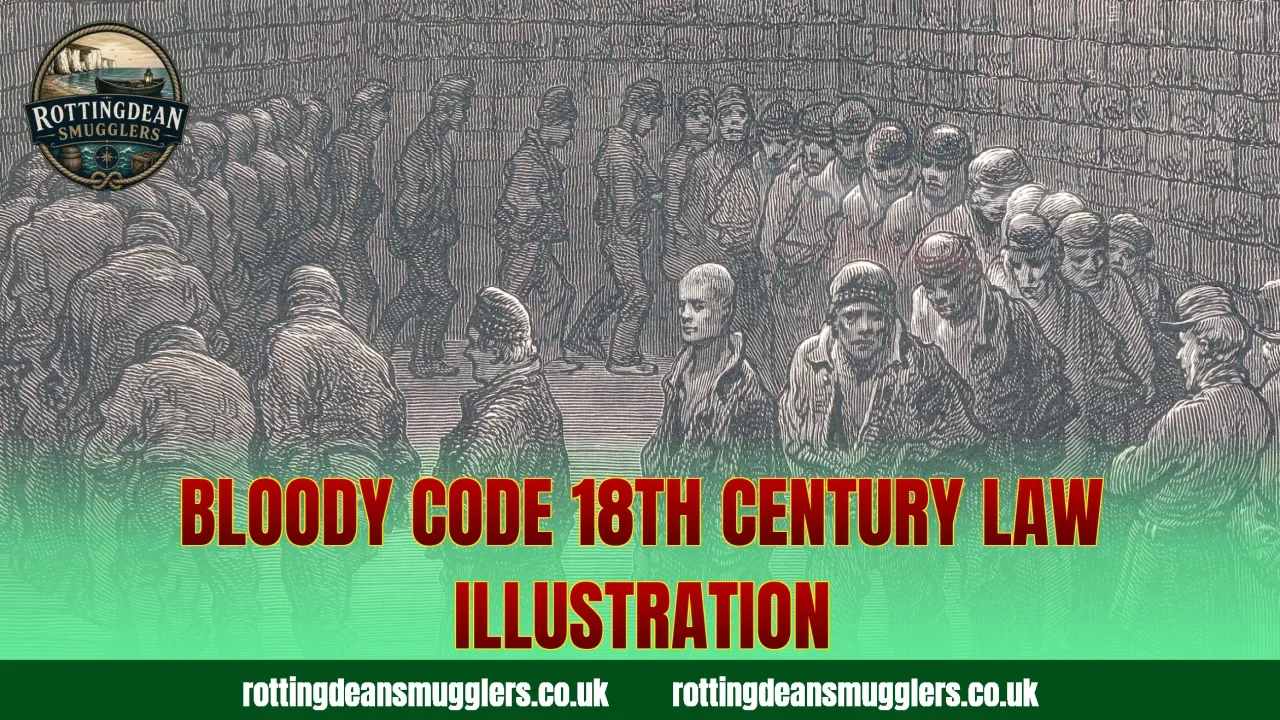
Bloody Code 18th century smuggling operated within a legal framework that listed over 200 capital offences by the mid-1700s. Parliament added new crimes to the death penalty list throughout the century, driven by fears over lost customs revenue and the growing power of smuggling gangs. Offences such as cutting down young trees or damaging Westminster Bridge carried the same theoretical punishment as violent robbery, which illustrates just how indiscriminate the system had become.
How courts applied capital punishment to smugglers
Under the Smuggling Act of 1746, being found armed near the coast in the company of other smugglers became a capital offence. Prosecutors no longer needed to prove a specific act of smuggling — mere association was enough to send a man to the gallows. Juries, however, often refused to convict because they considered the punishment wildly disproportionate to the crime, which is one reason the Bloody Code 18th century smuggling prosecutions frequently collapsed before reaching a verdict.
The Hawkhurst Gang and the limits of deterrence
The Hawkhurst Gang of Kent and Sussex became the most notorious example of organised smuggling under the Bloody Code. Their violent reprisals against informers and customs officers demonstrated that the threat of execution did little to curb ambition when profits were extraordinary. The Bloody Code 18th century smuggling framework ultimately met its match in gangs that had the resources, local loyalty, and ruthlessness to operate almost openly for years before the state managed to dismantle them.
Bloody Code 18th century smuggling: social roots and economics
Smuggling in Georgian England was not simply an opportunistic crime — it was a structured economic response to oppressive taxation. Understanding why so many ordinary people participated requires looking beyond the courtroom and into the everyday realities of coastal life.
Why high tariffs made smuggling inevitable
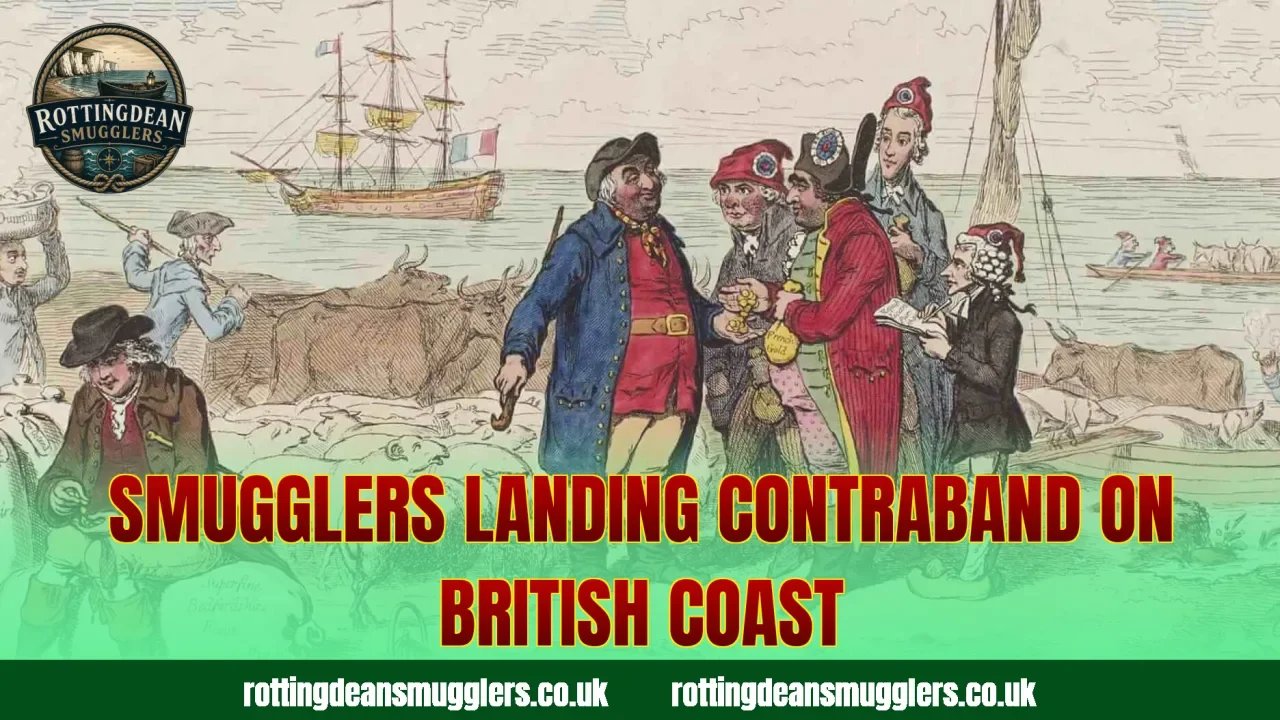
By the 1720s, import duties on tea, brandy, silk, and tobacco had reached levels that made legitimate trade almost impossible for working families to afford. Smugglers offered the same goods at a fraction of the legal price, and consumers across every social class bought from them willingly. The Bloody Code 18th century smuggling system struggled to function as a deterrent precisely because both suppliers and buyers viewed the customs duties themselves as the true injustice.
Community complicity along the southern coast
Entire villages participated in the smuggling economy — farmers lent horses, innkeepers stored contraband, and clergymen sometimes looked the other way. Informing on a neighbour meant social exclusion, and in tight-knit coastal communities that was a punishment few were willing to risk. The reach of Bloody Code 18th century smuggling laws was therefore blunted by an informal wall of silence that neither magistrates nor revenue officers could easily penetrate.
The role of poverty in driving men to the trade
Wages for agricultural labourers in southern England remained desperately low throughout the 18th century, and a single successful smuggling run could earn a man several months’ income one night. Risk and reward were clearly understood by those who participated, and many men calculated that the odds of actual prosecution were slim given the difficulties of gathering evidence. The Bloody Code 18th century smuggling penalties loomed large in theory, but in practice the chances of escaping justice were considered reasonable enough to justify the gamble.
| Key legislation | Year enacted | Primary target | Penalty |
|---|---|---|---|
| Waltham Black Act | 1723 | Armed poachers and forest criminals | Death |
| Smuggling Act | 1736 | Organised smuggling gangs | Death or transportation |
| Smuggling Act | 1746 | Armed association near the coast | Death without benefit of clergy |
| Hovering Act | 1718 | Vessels loitering off the coast | Forfeiture and fines |
| Customs Consolidation Act | 1787 | Broader customs fraud | Transportation or imprisonment |
Enforcement challenges that undermined the Bloody Code
Even when prosecutors had sufficient evidence and willing juries, enforcing the Bloody Code against smugglers presented practical difficulties that the state was slow to overcome. Corrupt officials, inadequate resources, and sheer geography all worked against systematic enforcement.
Corruption within the customs service
Revenue officers were poorly paid and often susceptible to bribery from well-funded smuggling operations. Some officers accepted regular payments to ignore landing sites, while others actively tipped off gangs about planned raids. This internal corruption fundamentally undermined the deterrent purpose of Bloody Code 18th century smuggling legislation, since even those tasked with enforcement sometimes had a financial interest in its failure.
Geographical obstacles along the Sussex coast
The chalk cliffs, hidden coves, and tangled network of lanes across Sussex and Kent created a natural smuggling infrastructure that customs officers found almost impossible to monitor effectively. Goods landed at night could vanish into barns and cellars within hours, moved along routes that locals knew intimately and outsiders did not. Enforcing Bloody Code 18th century smuggling statutes required intelligence that communities were simply unwilling to provide to government agents.
The military response and its mixed results
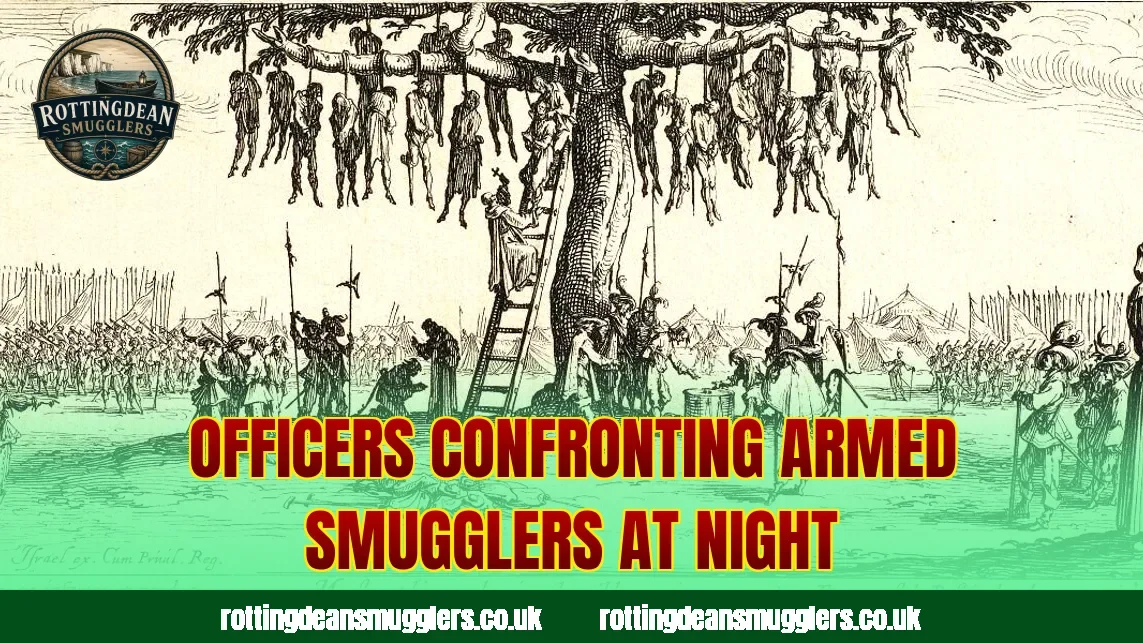
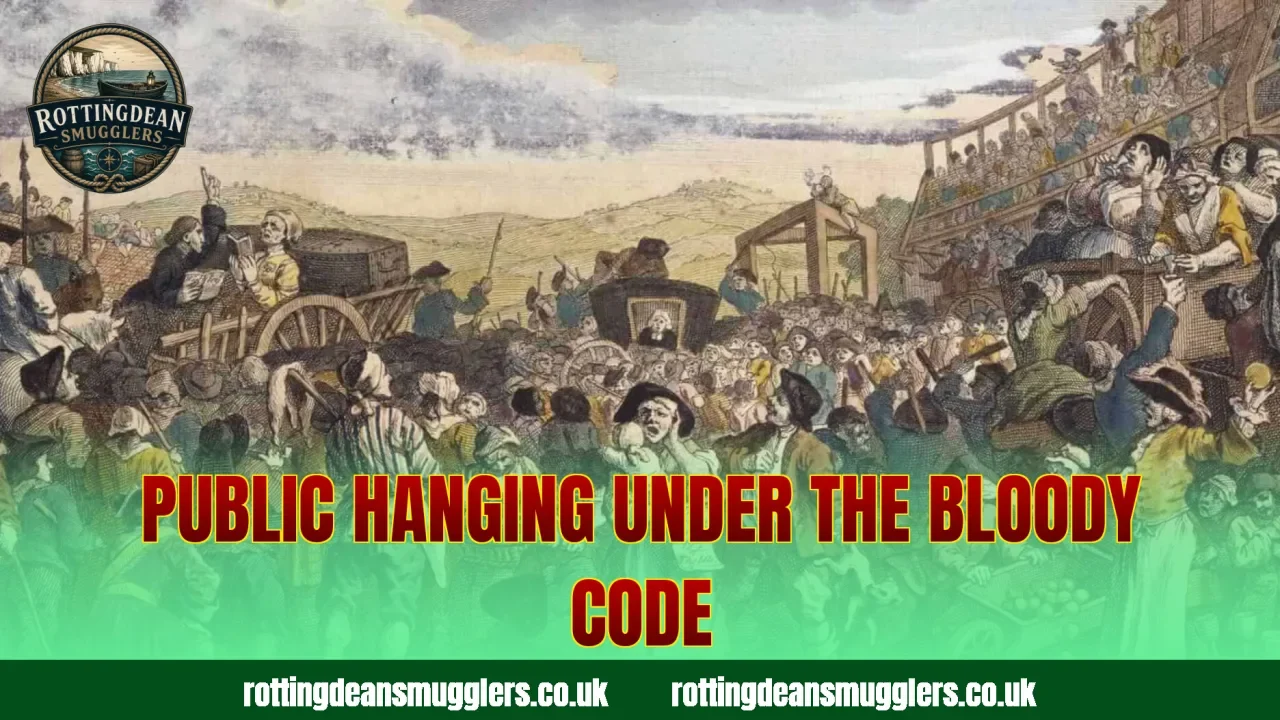
By the 1740s the government deployed dragoons and naval vessels to assist customs officers along the most problematic stretches of coastline. These military interventions occasionally produced dramatic arrests and public hangings designed to send a clear message, but they rarely disrupted the underlying networks for long. The Bloody Code 18th century smuggling era demonstrated a recurring truth: that harsh penalties without effective enforcement infrastructure produce spectacle rather than lasting suppression.
Decline of the Bloody Code and the legacy it left
By the early 19th century, opinion was turning against the sweeping death penalty provisions that had defined English criminal law for a century. Reformers argued that disproportionate punishment undermined justice rather than strengthening it, and Parliament gradually began dismantling the most extreme provisions of the Bloody Code.
William Pitt’s tariff reforms and their impact
The most effective blow against smuggling came not from the gallows but from the Treasury. William Pitt the Younger’s Commutation Act of 1784 slashed duties on tea from over 100% to 12.5% in a single stroke, removing the enormous profit margin that had sustained the trade for decades. This pragmatic reform succeeded where Bloody Code 18th century smuggling prosecutions had repeatedly failed, illustrating that economic policy is often a more powerful instrument than criminal law when addressing crimes driven by market distortions.
Samuel Romilly and the push for criminal law reform
Samuel Romilly began his parliamentary campaign against capital punishment in 1808, arguing that excessive severity produced public sympathy for criminals rather than deterrence. He found that juries regularly refused to convict when the mandatory sentence was death, creating a system where impunity paradoxically resulted from harshness. The failure of Bloody Code 18th century smuggling enforcement provided reformers with concrete evidence that the deterrence theory underpinning the entire system was empirically flawed.
How the Bloody Code reshaped English criminal justice
The eventual dismantling of the Bloody Code between the 1820s and 1830s produced a more coherent and proportionate criminal justice framework that could actually secure convictions. Transportation to Australia replaced execution for many offences, and a professional police force gradually replaced the patchwork of constables and revenue men who had been so easily circumvented. The long experience of Bloody Code 18th century smuggling enforcement became a formative case study in why punishment alone cannot substitute for structural economic and institutional reform.
Conclusion
Bloody Code 18th century smuggling remains one of history’s most instructive examples of how excessive punishment can fail when the conditions producing crime are left unaddressed. The gangs persisted not because smugglers were fearless, but because communities, economics, and corrupt institutions all conspired against enforcement. To explore how these dramatic events unfolded along the Sussex coast specifically, visit Rottingdean Smugglers for detailed local history and guided experiences that bring this extraordinary era to life.
Xem thêm: Separating Rottingdean Smuggling Myths From Facts — Rottingdean smuggling myths vs facts