Revenue cutters Sussex coast were the frontline vessels deployed by the British Crown to intercept smugglers operating across the treacherous waters of the English Channel. These armed patrol ships became a defining feature of 18th and 19th century maritime law enforcement, engaging in relentless cat-and-mouse pursuits with smuggling gangs who moved contraband freely along the Sussex shoreline. The battles fought between revenue men and free traders were not merely skirmishes — they shaped local history, coastal geography, and the communities that still remember them today.
Revenue cutters Sussex coast: the hidden war at sea
The conflict between Crown enforcers and smuggling networks along the Sussex coast unfolded over more than a century of maritime tension. Revenue cutters Sussex coast operations intensified as smuggling became increasingly organized and violent, forcing the government to deploy faster, better-armed vessels to keep pace.
How the revenue cutter service was formed
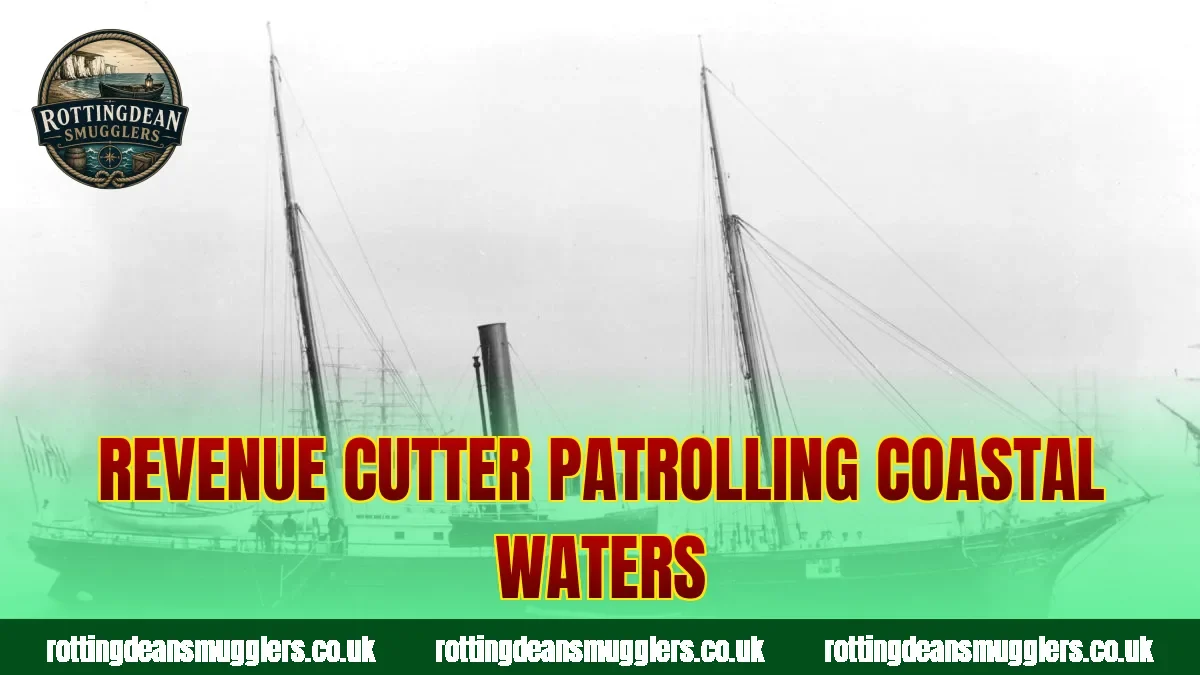
Revenue cutters Sussex coast patrols grew out of a desperate need to control rampant customs evasion that was costing the Crown millions in lost duties each year. The British government established a dedicated fleet of fast sailing vessels — known as revenue cutters — specifically designed to outrun smuggling luggers on open water. These vessels were typically armed with swivel guns and small cannon, crewed by experienced sailors who understood the tides and inlets of the Sussex shoreline better than almost anyone else.
The geography that defined every patrol route
The Sussex coast presented both advantages and challenges for revenue officers tasked with intercepting contraband shipments arriving from France and the Low Countries. From Hastings to Chichester, the shoreline was dotted with hidden coves, shallow landing beaches, and narrow tidal creeks that smugglers exploited with extraordinary skill. Revenue cutters Sussex coast commanders had to master this same geography just to have any realistic chance of catching their quarry before the goods disappeared inland.
Vessels, armament, and crew life aboard cutters
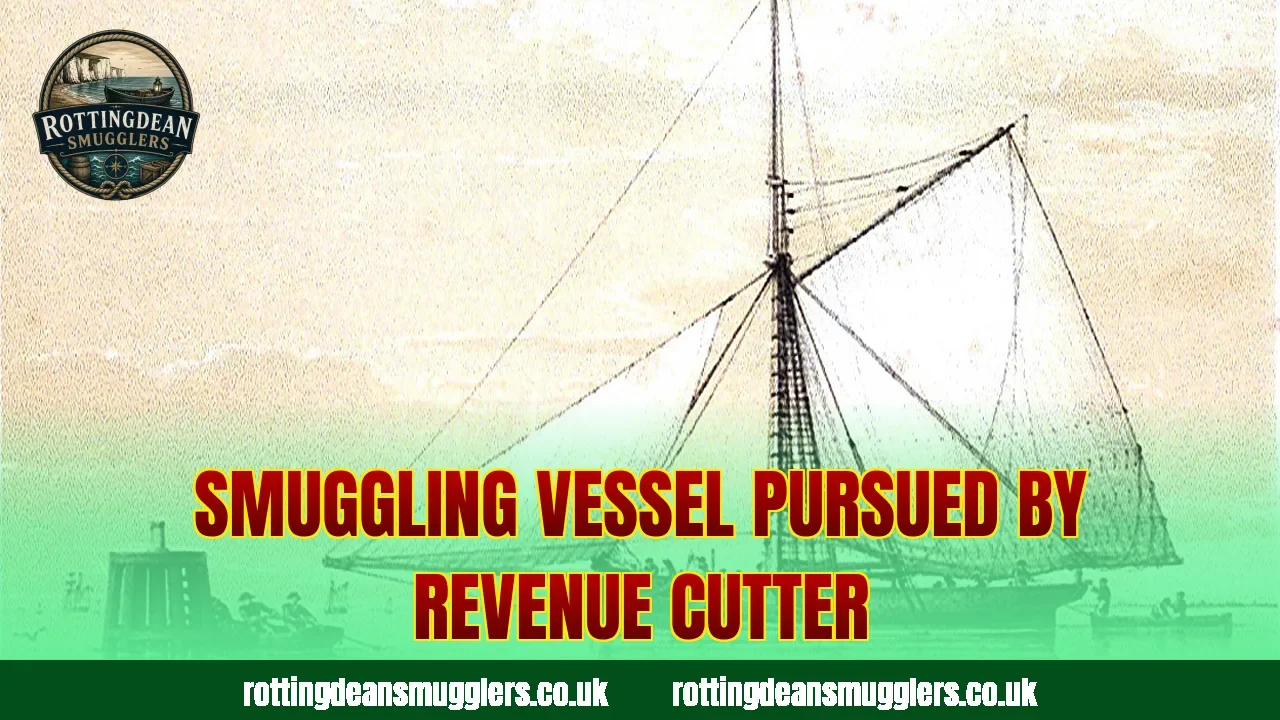
Life aboard a revenue cutters Sussex coast patrol vessel was demanding and often dangerous, with crews spending long stretches at sea in all weathers watching for suspicious sail. The cutters themselves were single-masted fore-and-aft rigged ships, chosen for their speed and maneuverability in shallow coastal waters where larger Royal Navy vessels could not easily follow. Armament varied, but most carried enough firepower to subdue a smuggling vessel if the crew was willing to make a stand rather than scatter ashore.
Revenue cutters Sussex coast and smuggling gang tactics
Smuggling gangs operating along the Sussex coast were far from disorganized bandits — they ran sophisticated operations with armed escorts, decoy vessels, and networks of informants embedded inside the revenue service itself. Revenue cutters Sussex coast patrols faced an enemy that knew every trick and had the financial resources to stay one step ahead.
The Hawkhurst Gang and organized resistance
Few smuggling organizations challenged revenue cutters Sussex coast operations as boldly as the Hawkhurst Gang, which dominated contraband trade across Kent and East Sussex during the 1740s and early 1750s. At their peak, the gang could mobilize hundreds of armed men to escort runs of tea, brandy, and silk from the beach to inland distribution points, daring revenue officers to intervene. Their eventual downfall came not from sea engagements but from the brutal murder of an informant, which finally pushed Parliament to treat smuggling as a capital offense warranting military intervention.
Decoy runs, false signals, and night landings
Smuggling crews developed an elaborate repertoire of tactics designed specifically to neutralize the threat posed by revenue cutters Sussex coast patrols watching the Channel approaches. False signal fires lit on cliff tops would draw revenue vessels toward empty beaches while the real landing happened miles away in the darkness. Night operations became the default mode for serious contraband runs, with tub men and batmen waiting on shore to carry goods inland before dawn broke and riding officers could react.
Violence, standoffs, and fatal engagements
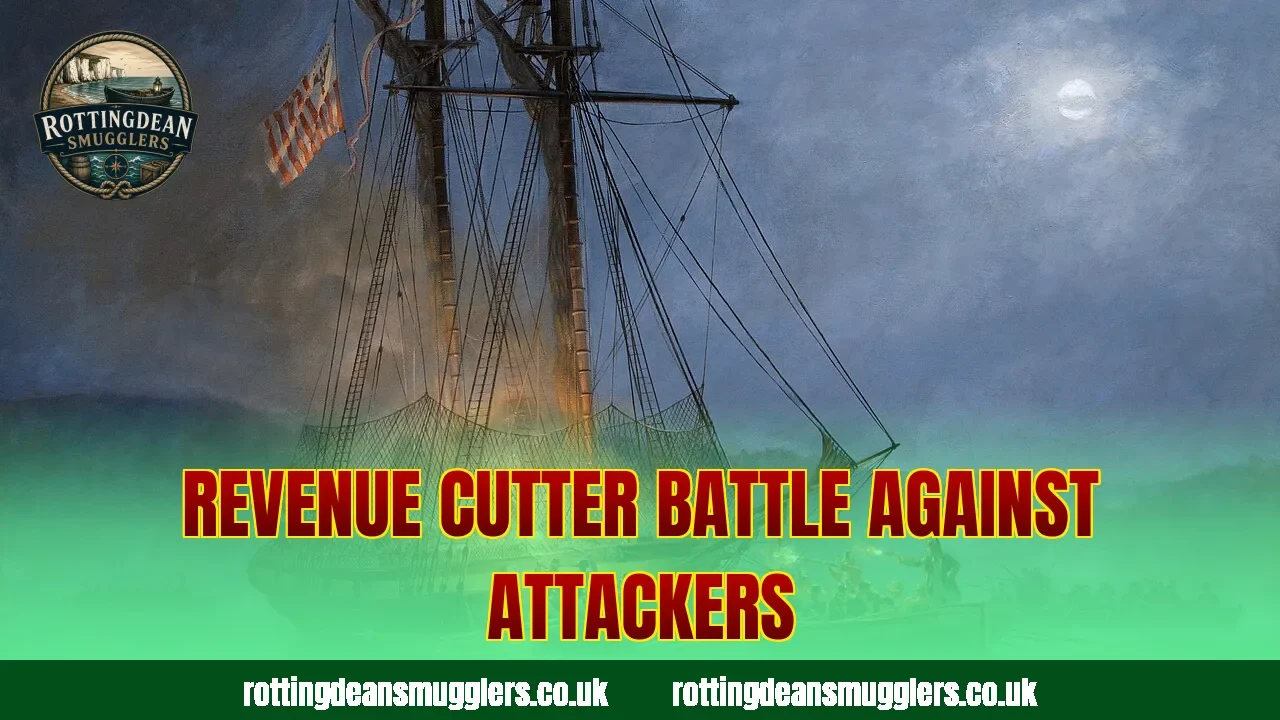
The waters off Sussex witnessed genuine armed confrontations between revenue cutters Sussex coast crews and smuggling vessels that refused to heave to when ordered. Shots were exchanged, men were killed on both sides, and the bodies of revenue officers occasionally washed ashore bearing evidence of deliberate murder rather than combat. Historical records from the Customs House in London document dozens of formal incidents where cutter commanders reported being outgunned or outrun by heavily laden smuggling luggers that simply refused to surrender.
Key battles and incidents along the Sussex shore
Several confrontations between revenue cutters and smuggling vessels became significant enough to enter the historical record, illustrating just how violent and high-stakes this maritime conflict had become by the mid-18th century. These documented incidents offer valuable insight into both the tactics employed and the human cost paid by those caught in the middle of revenue cutters Sussex coast operations.
The seizure at Pevensey Bay, 1749
One of the more detailed accounts from the period describes a revenue cutters Sussex coast crew intercepting a large consignment of tea and spirits being landed near Pevensey Bay under cover of darkness in the autumn of 1749. The cutter’s crew managed to secure several tubs before armed men on shore opened fire, wounding two officers and forcing a tactical withdrawal to deeper water. The seized goods were eventually recovered, but the incident highlighted how dangerous even a partial seizure could be when gangs were willing to use lethal force to protect their investment.
Rottingdean and the village landing network
Rottingdean became one of the most notorious landing points on the Sussex coast, with a well-organized local network that had been receiving contraband runs for generations before revenue cutters Sussex coast patrols began closing in during the late 18th century. The village’s proximity to Brighton, combined with its chalk cliff geography and concealed beach access, made it ideal for landing goods that could quickly disappear into a network of tunnels and sympathetic households. Revenue officers who attempted to operate in the village often found that local knowledge worked decisively against them.
How the 1784 Hovering Act changed enforcement
Parliament’s passage of the Hovering Act in 1784 represented a direct legislative response to the ongoing failure of revenue cutters Sussex coast patrols to contain smuggling activity through traditional interception methods alone. The act gave revenue officers new authority to seize any vessel found hovering within a defined distance of the English coast without legitimate business, closing a legal loophole that smugglers had exploited for decades. Combined with increased cutter numbers and better coordination with riding officers on shore, the legislation began to shift the balance of power gradually away from the free traders.
| Period | Key development | Impact on revenue cutters Sussex coast |
|---|---|---|
| 1700–1730 | Early cutter deployments along Channel | Limited effectiveness due to inferior vessel speed |
| 1730–1750 | Rise of organized gangs like Hawkhurst | Revenue patrols outgunned and often outnumbered |
| 1750–1780 | Military assistance requested from Army | Dragoon patrols supplemented cutter operations |
| 1784 | Hovering Act passed by Parliament | Broader seizure powers granted to cutter crews |
| 1800–1830 | Coastguard service established | Revenue cutters absorbed into unified coastal patrol |
Conclusion
Revenue cutters Sussex coast patrols represent one of the most fascinating and underappreciated chapters in English maritime history, combining naval tactics, criminal enterprise, and genuine human drama played out against a backdrop of chalk cliffs and Channel storms. The legacy of these confrontations lives on in villages like Rottingdean, where the memory of smugglers and the men who hunted them remains remarkably vivid. To explore this history further, visit Rottingdean Smugglers and discover the full story behind one of Sussex’s most compelling coastal communities.
Xem thêm: History of smuggling in Rottingdean | Rottingdean Smugglers