Historical sites in East Sussex offer an extraordinary window into centuries of English heritage, from medieval castles to ancient smugglers’ villages. This coastal county holds some of Britain’s most compelling landmarks, each carrying stories shaped by war, trade, and local legend. Whether you’re drawn to Norman fortresses, prehistoric burial mounds, or Georgian townscapes, East Sussex delivers history at every turn. This guide walks you through the region’s most significant landmarks, helping you plan a truly memorable heritage journey across one of England’s most storied counties.
Historical sites in East Sussex worth exploring
East Sussex is remarkably rich in preserved landmarks that span thousands of years of continuous human activity. From the chalk cliffs of the Seven Sisters to the ancient Weald forest, the landscape itself shapes the history found here.
Pevensey Castle and its Norman legacy
Historical sites in East Sussex rarely carry as much strategic weight as Pevensey Castle, where William the Conqueror first landed in 1066. Built within the walls of a Roman fort, this layered fortress tells the story of invasion, occupation, and medieval power across multiple centuries. Visitors today can walk through Roman stonework and Norman keeps side by side, experiencing nearly two thousand years of English military history in a single location.
Lewes Castle and the town’s medieval character
Lewes Castle stands at the heart of one of East Sussex’s most historically dense market towns, offering sweeping views over the surrounding South Downs. The castle dates to shortly after the Norman Conquest and was constructed by William de Warenne, one of William the Conqueror’s most trusted commanders. Alongside the castle, Lewes preserves a remarkable collection of medieval streets, flint-walled buildings, and independent museums that reward curious visitors throughout the year.
Bodiam Castle and its picture-perfect moat
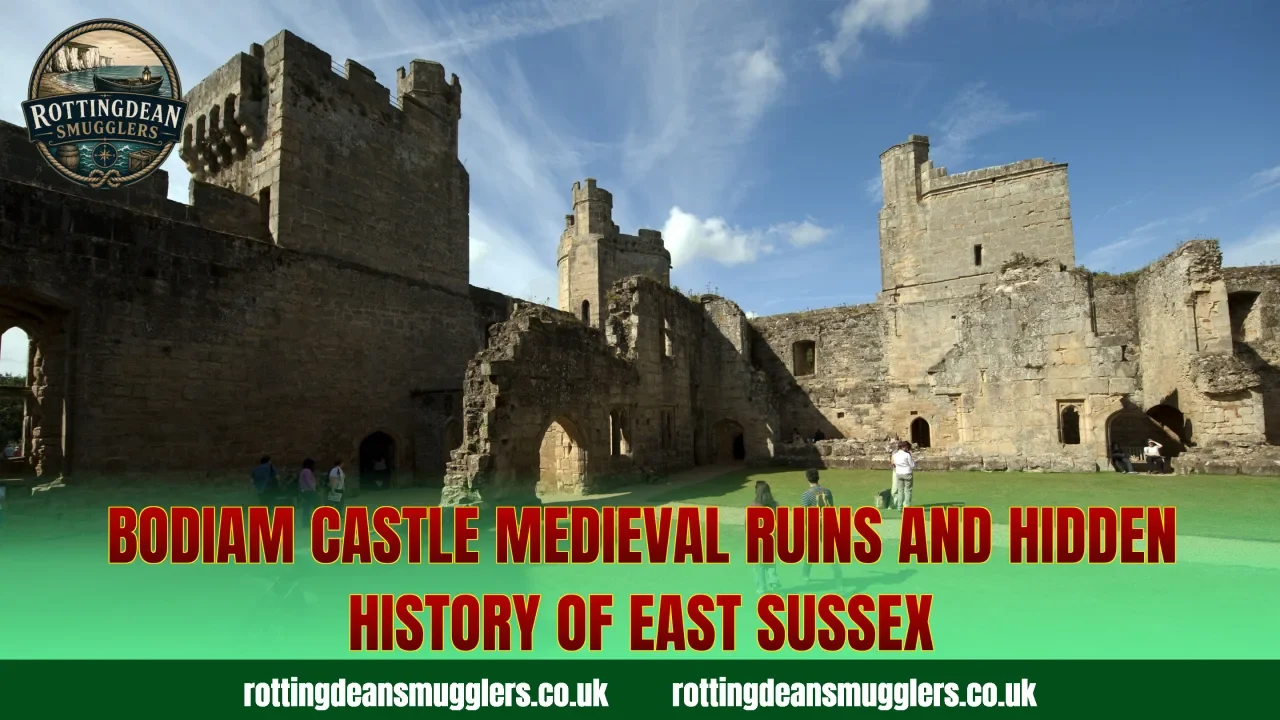
Bodiam Castle, nestled in the Rother Valley, is among the most photographed medieval structures in all of England, with its intact moat reflecting the towers perfectly on calm days. Built in 1385 as a defence against French invasion during the Hundred Years’ War, the castle represents late medieval military architecture at its most dramatic. The National Trust manages the site carefully, and its grounds attract historians, photographers, and families who appreciate both the architecture and the peaceful riverside setting.
Hidden historical sites in East Sussex you should visit
Beyond the well-known castles, East Sussex holds quieter, lesser-visited landmarks that reward those willing to venture off the main tourist trail. These hidden gems often tell more intimate stories of everyday life, local faith, and forgotten industries.
Rottingdean village and its smuggling heritage
Among the most characterful historical sites in East Sussex, Rottingdean village stands out for its remarkably preserved Georgian streetscape and its deep connection to the county’s notorious smuggling past. The village sits on the chalk cliffs between Brighton and Newhaven, and its tight lanes and flint cottages once sheltered members of the Rottingdean Gang, one of the most active smuggling networks in eighteenth-century Sussex. Today, visitors can explore the village green, the medieval church of St Margaret, and the Grange Museum, which documents both the smuggling history and the literary legacy of residents like Rudyard Kipling.
Battle Abbey and the 1066 battlefield
Battle Abbey occupies the exact ground where King Harold fell during the Battle of Hastings in October 1066, making it one of the most emotionally significant historical sites in East Sussex. William the Conqueror ordered the abbey built as an act of penance, with the high altar reportedly positioned at the spot where Harold died. The English Heritage site now includes an interactive exhibition, a well-preserved gatehouse, and a marked battlefield trail that brings this world-changing moment in English history vividly to life.
Alfriston Clergy House and the oldest National Trust property
Alfriston Clergy House holds the remarkable distinction of being the very first building acquired by the National Trust, purchased in 1896 for just ten pounds. This fourteenth-century Wealden hall house sits beside the River Cuckmere in a village that itself feels largely unchanged from the medieval period. The thatched roof, timber-framed walls, and cottage garden make it one of the most visually enchanting historical sites in East Sussex, and the surrounding Cuckmere Valley adds a layer of natural beauty that enhances every visit.
Coastal and prehistoric landmarks across the county
East Sussex extends its historical depth well beyond the medieval period, reaching back into prehistory and forward through the Victorian era. The coastline in particular carries layers of significance, from Iron Age hillforts to Napoleonic-era defences.
The Long Man of Wilmington and chalk hill figures
The Long Man of Wilmington is one of England’s most enigmatic chalk hill figures, cut into the northern face of Windover Hill near the village of Wilmington in the South Downs. Debate continues among historians and archaeologists about whether the figure dates to the Iron Age, the Romano-British period, or even the medieval era, making it one of the most genuinely mysterious historical sites in East Sussex. At 69 metres tall, the outline is best viewed from the road below, particularly in early morning light when the chalk lines cast long shadows across the hillside.
Hastings Old Town and its fishing heritage
Hastings Old Town preserves one of England’s last remaining beach-launched fishing fleets, operating from the same shingle shoreline that has supported the local fishing community for centuries. The distinctive tall black net shops, used to store fishing equipment, line the Stade and remain a working part of the town’s daily life rather than a museum exhibit. Exploring the Old Town’s winding streets, independent shops, and the Fishermen’s Museum reveals how deeply historical sites in East Sussex remain woven into the fabric of living communities rather than simply preserved for tourism.
Beachy Head and the Belle Tout lighthouse
Beachy Head rises 162 metres above the English Channel, forming the highest chalk sea cliff in Britain and a landmark visible from far out at sea for centuries of mariners. The Belle Tout lighthouse, built in 1832 and famously relocated inland in 1999 to escape coastal erosion, adds a Victorian layer to this already dramatic stretch of coastline. As one of the most visited historical sites in East Sussex, Beachy Head connects natural geography with maritime history, offering walking routes along the South Downs Way that reveal spectacular views at every step.
Key landmarks at a glance
The table below summarises the most significant landmarks covered in this guide, helping you plan your itinerary efficiently across the county.
| Landmark | Location | Period | Managed by |
|---|---|---|---|
| Pevensey Castle | Pevensey | Roman / Norman | English Heritage |
| Battle Abbey | Battle | Norman (1066) | English Heritage |
| Bodiam Castle | Bodiam | Medieval (1385) | National Trust |
| Alfriston Clergy House | Alfriston | 14th century | National Trust |
| Lewes Castle | Lewes | Norman | Sussex Archaeological Society |
| Rottingdean Village | Rottingdean | Georgian / Medieval | Local authority / independent |
| Long Man of Wilmington | Wilmington | Prehistoric / uncertain | Sussex Archaeological Society |
| Beachy Head & Belle Tout | Eastbourne | Victorian / natural | Eastbourne Borough Council |
Conclusion
Historical sites in East Sussex form one of the most diverse and rewarding heritage landscapes in the whole of England, ranging from Norman castles to prehistoric chalk figures and living fishing communities. Each location carries its own distinct atmosphere, and a well-planned visit can take you from Roman walls to Georgian smugglers’ lanes within a single day. For an unforgettable start to your East Sussex heritage journey, Rottingdean Smugglers is the perfect introduction to the county’s coastal history and local character.
Xem thêm: Rottingdean beach walk to Brighton – Scenic route