Martello towers East Sussex history tells the story of a remarkable chain of coastal defences built to stop Napoleon’s forces from ever reaching British shores. These squat, circular brick forts once lined the Sussex coastline in impressive numbers, each one designed to withstand cannon fire and house a small armed garrison. They represent one of Britain’s most ambitious military engineering projects, and several still stand today as listed buildings, museums, and private homes. Understanding their origins, design, and legacy gives us a vivid window into the fears and ingenuity of Regency-era Britain.
Martello towers East Sussex history and origins
The story behind these coastal forts begins with a very real and pressing threat. By the early 1800s, Napoleon Bonaparte had assembled a vast invasion fleet at Boulogne, and the English Channel felt dangerously narrow to those watching from the Sussex cliffs.
The Napoleonic threat that changed British defence
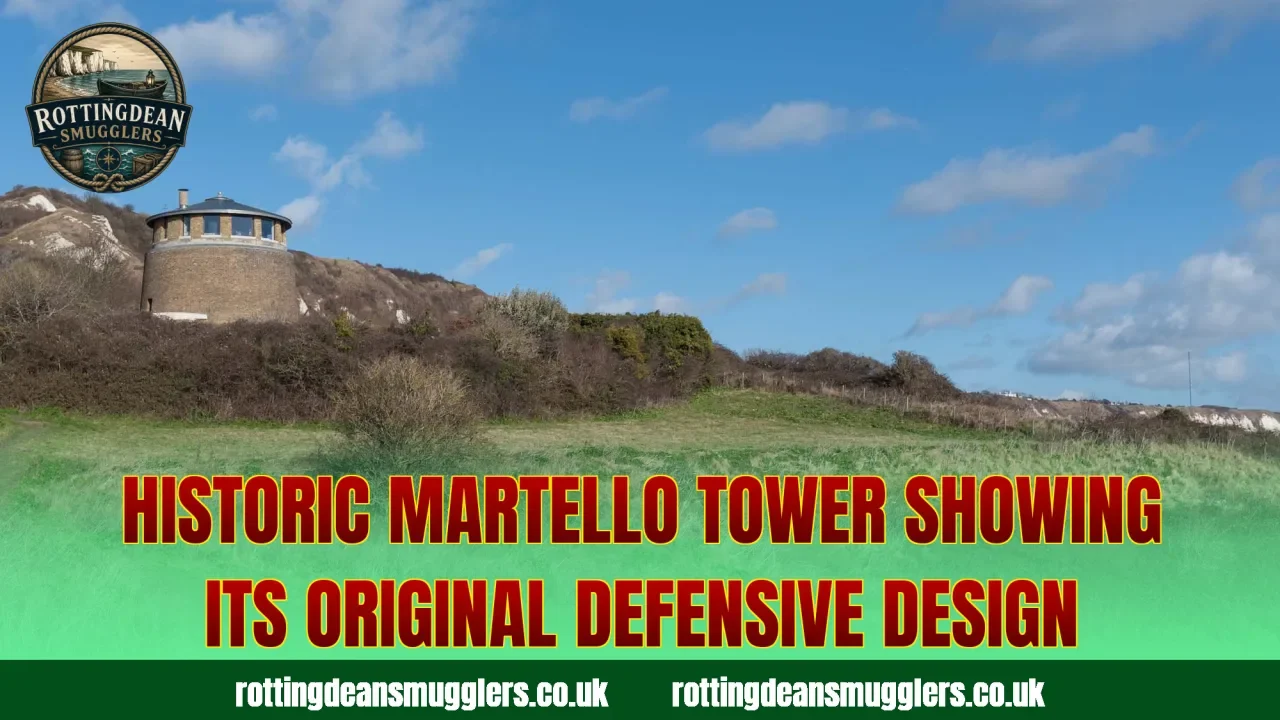
Martello towers East Sussex history starts in earnest around 1805, when the British government authorised the construction of a defensive line stretching from Seaford in East Sussex to Folkestone in Kent. The Royal Engineers modelled the design on a tower at Mortella Point in Corsica, which had famously resisted a prolonged British naval assault in 1794. That single tower’s stubborn resilience convinced military planners that the circular fort design was worth replicating on a massive scale along England’s most vulnerable coastline.
How the design was adapted for Sussex shores
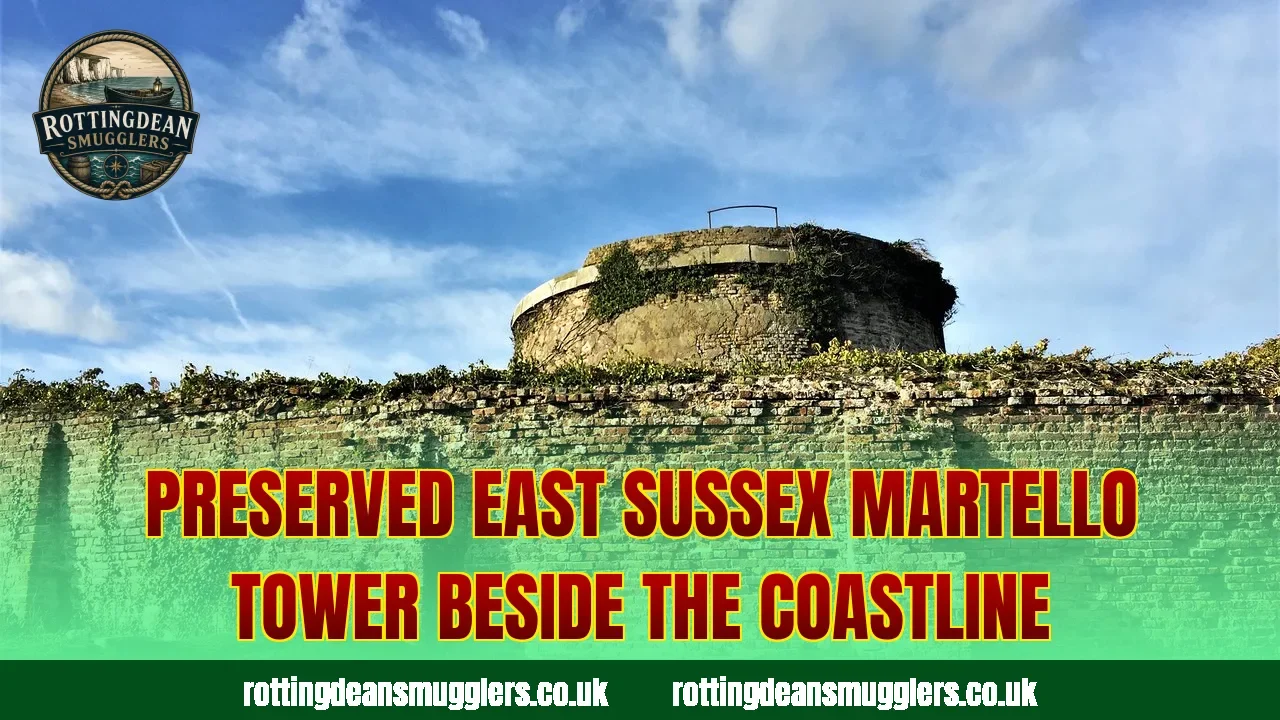
Each tower was built from around 500,000 bricks, with walls up to four metres thick on the seaward side to deflect incoming cannon fire. The ground floor was used for ammunition and supply storage, while soldiers lived on the first floor, and a heavy cannon was mounted on the flat roof above. Martello towers East Sussex history shows how engineers adapted the original Corsican design to suit the flat, exposed nature of the Sussex and Kent coastline, making each structure slightly larger and more heavily armed than its Mediterranean predecessor.
The speed and scale of the building programme
Construction moved at a remarkable pace given the technology of the time, with most of the Sussex towers completed between 1805 and 1808. At the height of the programme, hundreds of labourers worked simultaneously along the coast, mixing lime mortar and laying courses of specially fired brick. Martello towers East Sussex history records that 103 towers were eventually built across Sussex and Kent, numbered sequentially from east to west, forming one of the largest coordinated military construction projects Britain had ever undertaken.
Martello towers East Sussex history: key locations
The towers were not distributed randomly but placed with careful tactical logic, positioned at intervals of roughly half a mile so that their cannon fire could overlap and cover every approach from the sea.
Pevensey Bay and the eastern Sussex towers
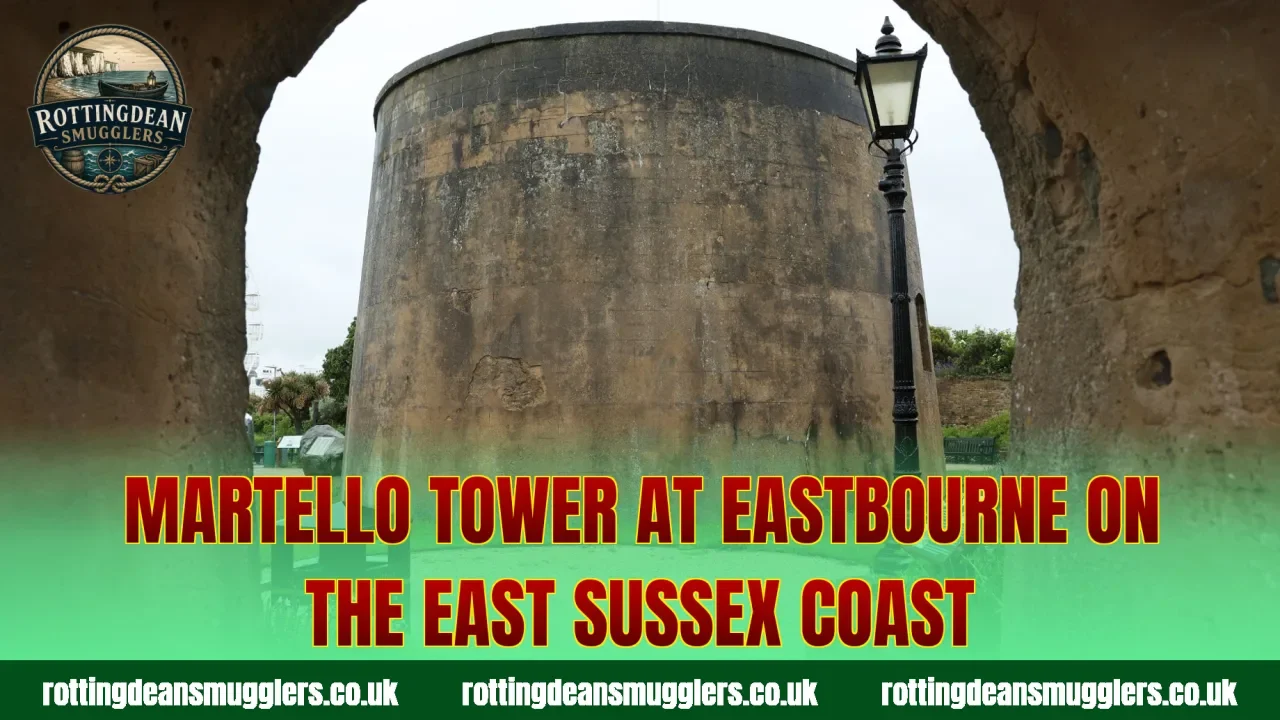
Martello towers East Sussex history gives particular prominence to the stretch between Pevensey Bay and Eastbourne, where several towers remain in various states of preservation. This section of coastline was considered especially vulnerable because of its flat, open beaches, which offered an invading army an ideal landing ground. The towers here were built with particular urgency, and their thick walls and elevated cannon platforms reflected the very real anxiety of a nation preparing for the worst.
Seaford and the western defensive anchor
At the western end of the East Sussex chain, the tower at Seaford served as a strategic anchor point for the entire defensive line. Today it operates as the Seaford Museum of Local History, welcoming visitors who want to explore its original interior layout and learn about the soldiers who once garrisoned it. Martello towers East Sussex history is particularly well preserved at Seaford, where the building’s original brick fabric, vaulted ceilings, and ground-floor storage chambers remain largely intact and open to public exploration.
The Royal Military Canal as a supporting defence
The towers did not stand alone but were part of a broader defensive network that included the Royal Military Canal, a man-made waterway running behind the coastline through Romney Marsh. The canal was designed to act as a second line of defence, slowing any invading force that managed to push inland past the coastal towers. Martello towers East Sussex history is inseparable from this wider system, and understanding the canal helps explain why the towers were positioned where they were, forming an interlocking web of obstacles rather than a single defensive line.
What happened to the towers after Napoleon?
Once the Napoleonic threat faded after Waterloo in 1815, the British military found itself with a chain of expensive, purpose-built forts that no longer served their original function.
Military repurposing in the Victorian era
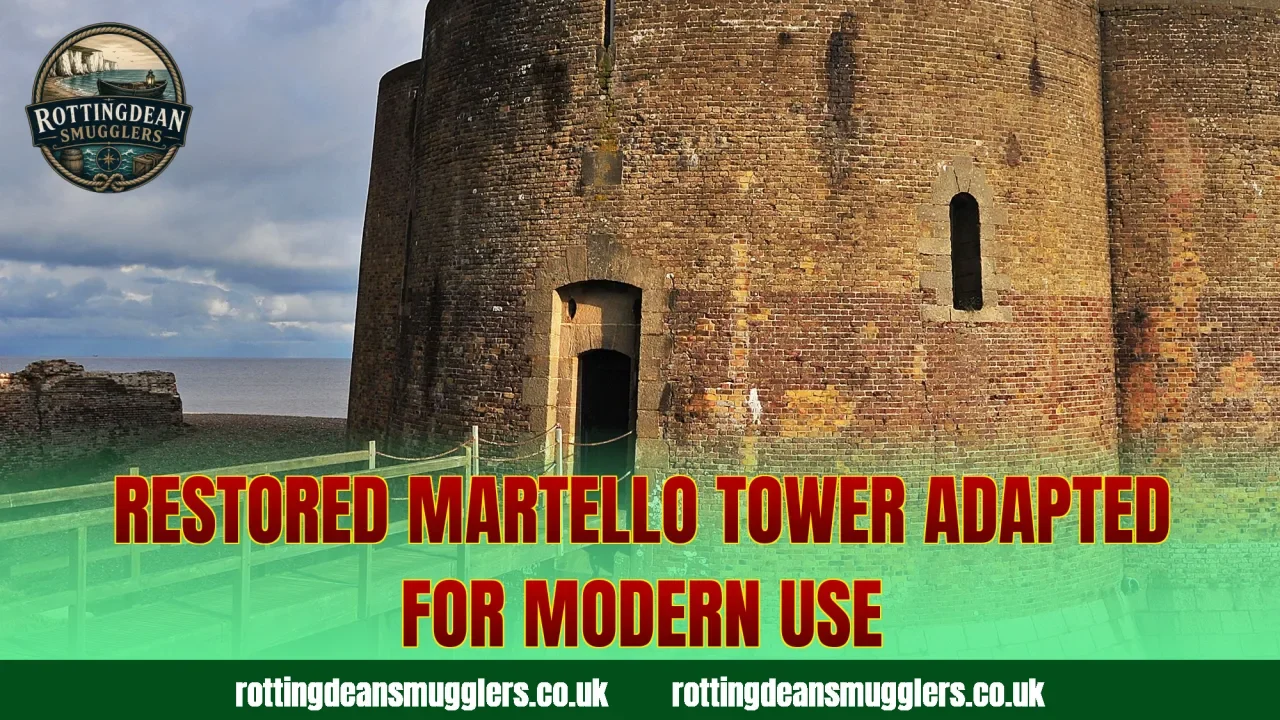
Some towers were retained by the military and adapted for new uses throughout the nineteenth century, serving as coastguard stations, signal posts, and storage facilities for the Board of Ordnance. Martello towers East Sussex history during the Victorian period reflects a gradual shift from active defence to administrative and logistical support roles, as the towers proved too solidly built to demolish cheaply and too useful to abandon entirely. A number were also used during both World Wars, fitted with observation equipment and communications gear to serve the coastal watch network.
Private conversion and heritage listing
From the mid-twentieth century onwards, many towers passed into private ownership and were converted into unusual and highly sought-after homes. Their thick walls provide exceptional insulation, their circular floor plans create distinctive living spaces, and their coastal positions are genuinely spectacular. Martello towers East Sussex history now includes a growing chapter on heritage conservation, with English Heritage and Historic England listing the surviving structures at various grades to protect their architectural and historical significance for future generations.
Towers open to the public today
Several towers along the East Sussex coast welcome visitors and offer guided tours, interactive displays, and access to original garrison-era features. The Seaford example remains the most accessible, while other towers at Eastbourne and along the Pevensey Bay stretch can be viewed from the outside and appreciated as striking landmarks in the coastal landscape. Martello towers East Sussex history continues to attract historians, architects, and heritage enthusiasts who recognise these structures as irreplaceable physical evidence of a pivotal moment in British military and social history.
Key facts about East Sussex Martello towers
The following table summarises the most important technical and historical details about the towers built along the East Sussex coastline, drawing on documented military records and heritage surveys.
| Feature | Detail |
|---|---|
| Construction period | 1805–1808 |
| Total towers built (Sussex and Kent) | 103 |
| Brick count per tower | Approximately 500,000 |
| Wall thickness (seaward side) | Up to 4 metres |
| Typical garrison size | 1 officer and 24 men |
| Cannon type mounted on roof | 24-pounder smooth-bore cannon |
| Design inspiration | Mortella Point tower, Corsica (1794) |
| Surviving towers in East Sussex | Approximately 20 |
| Notable public example | Seaford Museum of Local History |
| Heritage protection status | Listed buildings (various grades) |
Conclusion
Martello towers East Sussex history stands as enduring proof of what a nation can achieve when it faces an existential threat with creativity and determination. These coastal forts survived the invasion that never came, outlasted the empire that threatened to build them, and have now found new lives as homes, museums, and heritage landmarks beloved by locals and visitors alike. For more stories of Sussex coastal history, smugglers, and the hidden world of the English Channel, explore Rottingdean Smugglers and discover the full depth of this remarkable coastline’s past.
See also: Customs and Excise history UK – The Tax Enforcement