The Hawkhurst gang Sussex stands as one of the most feared and ruthless criminal organisations in eighteenth-century England. Operating across Kent and Sussex with near-total impunity, they smuggled vast quantities of tea, brandy, and silk while terrorising local communities. What made them so powerful, so violent, and ultimately so dangerous — and how did their reign of lawlessness finally come to an end?
The Hawkhurst gang Sussex: Origins and rise to power
Few criminal networks in English history grew as rapidly or as brutally as this one did. Understanding their roots reveals why the Hawkhurst gang Sussex became such a dominant force across the southern counties during the 1730s and 1740s.
How the gang first formed in rural Kent
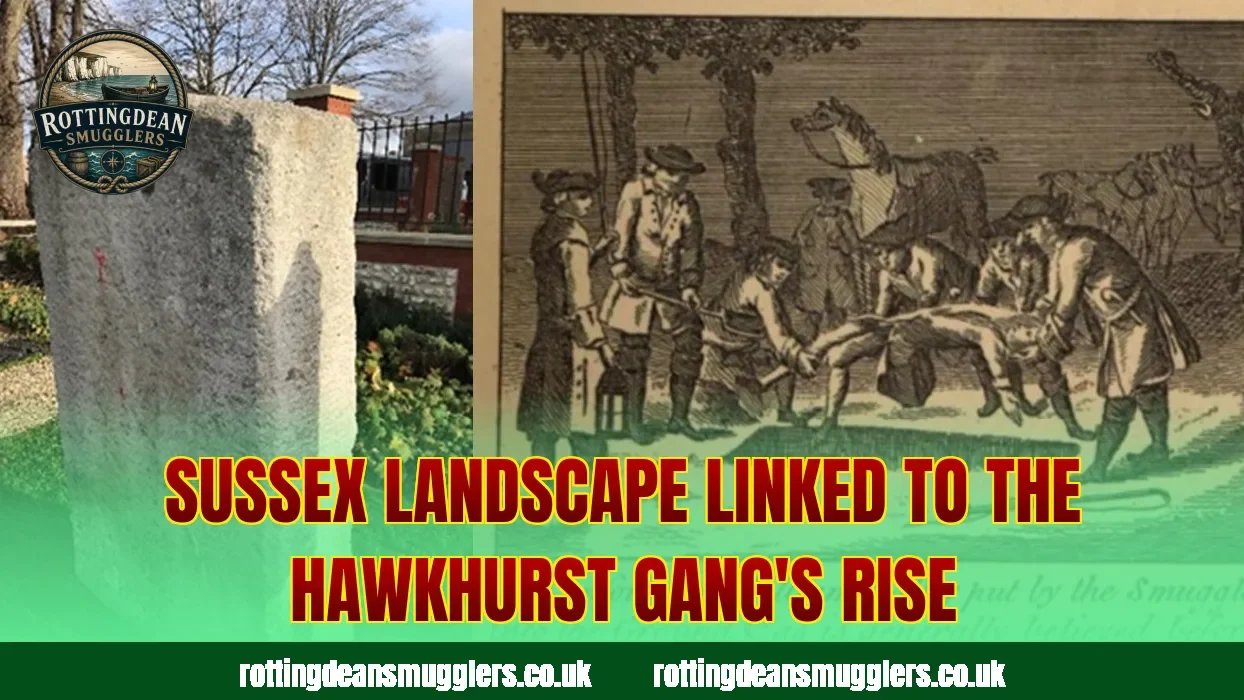
The Hawkhurst gang Sussex took its name from the village of Hawkhurst in Kent, where its earliest members gathered to exploit the region’s poorly policed coastline. The gang was formally established around 1735, drawing in local farmers, tradesmen, and labourers who saw smuggling as a far more profitable alternative to honest work. Within just a few years, they had grown from a loose collection of opportunists into a tightly organised criminal enterprise with hundreds of members.
Key figures who shaped their criminal empire
Arthur Gray and Thomas Kingsmill were among the most notorious leaders who drove the Hawkhurst gang Sussex operations with calculated ruthlessness. Gray was known for his willingness to use extreme violence against anyone who threatened the gang’s profits, while Kingsmill managed the logistical side of large-scale smuggling runs. Their leadership transformed what had been a regional nuisance into a network that defied government authority at every turn.
Why Sussex coastlines became their favoured territory
The remote beaches and hidden coves of Sussex offered ideal conditions for landing contraband under cover of darkness, which is why the Hawkhurst gang Sussex expanded so aggressively into the county. Locations such as Pevensey Bay, Camber Sands, and the marshes near Rye provided natural cover for unloading goods from French vessels. Local customs officers were either outnumbered, bribed, or simply too frightened to intervene against a gang that had already demonstrated its capacity for lethal violence.
The Hawkhurst gang Sussex brutal methods and crimes
Their reputation was not built on smuggling alone — it was cemented through systematic intimidation and shocking acts of public violence. The crimes committed by the Hawkhurst gang Sussex shocked even a society that had grown somewhat accustomed to the realities of organised smuggling.
Terrorising witnesses, informers, and customs men
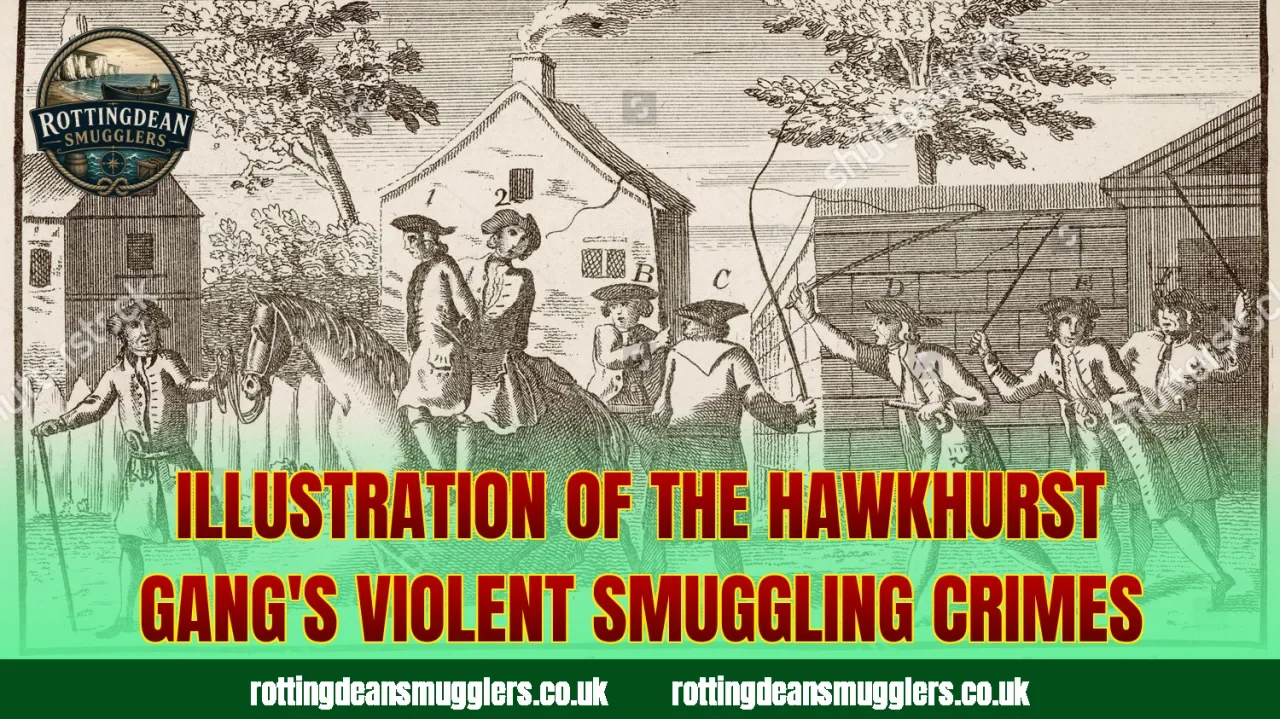
The Hawkhurst gang Sussex operated on a simple principle: anyone who interfered with their business would suffer severe consequences. Customs officers who attempted to seize contraband were beaten, tortured, or murdered, and their bodies were sometimes left in public places as a deliberate warning to others. Informers faced particularly grim fates, and the gang’s willingness to pursue and punish those who betrayed them created a culture of fear that stretched across entire villages in both Kent and Sussex.
The Goudhurst massacre and its aftermath
One of the most dramatic confrontations involving the Hawkhurst gang Sussex occurred at Goudhurst in April 1747, when local militia members formed the Goudhurst Band of Militia to resist them. The gang publicly threatened to burn the village and kill its inhabitants, but the militia stood their ground, killing several gang members including the gang leader’s brother. This rare defeat marked a turning point, demonstrating that organised resistance could challenge even the most feared criminal network of the era.
The Poole Customs House raid of 1747
Perhaps the most audacious act attributed to the Hawkhurst gang Sussex was the armed raid on Poole Customs House in October 1747. A large group of gang members rode openly through the town in broad daylight to reclaim a seized cargo of tea, completely overpowering the officers stationed there. This brazen attack finally forced the British government to take decisive action, as it became impossible to ignore a criminal organisation that could openly defy the state with impunity.
Downfall, trials, and the end of an era
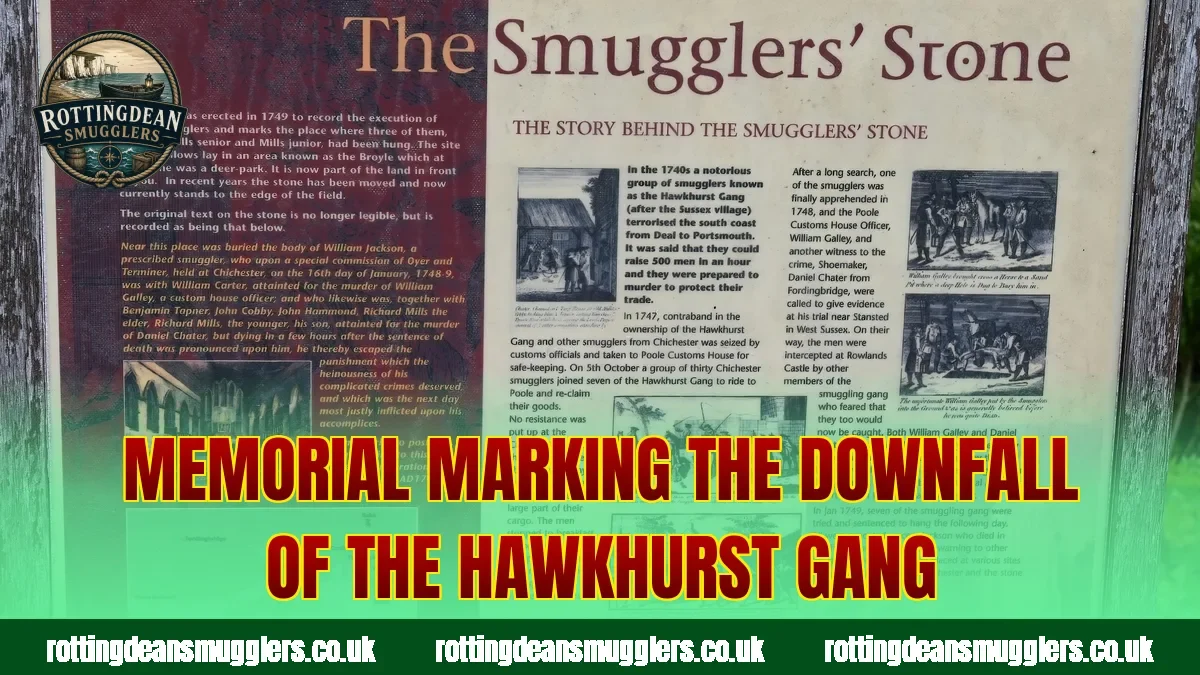
The brutal murder of customs informer William Galley and smuggler Daniel Chater in 1748 proved to be the moment that sealed the gang’s fate. The sheer savagery of these killings turned public opinion decisively against the Hawkhurst gang Sussex and gave government prosecutors the evidence and political will they needed to act.
How the murder of Galley and Chater changed everything
The Hawkhurst gang Sussex crossed an irreversible line when members tortured and murdered both William Galley and Daniel Chater with extraordinary cruelty in February 1748. Galley, a customs officer, and Chater, a witness to a previous crime, were subjected to prolonged abuse before being killed and buried in a well. The discovery of their bodies sparked a special commission of inquiry that gave authorities the legal framework to pursue gang members across county lines with unprecedented determination.
Trials, executions, and the collapse of the network
The special commission that followed resulted in the arrest and trial of numerous members of the Hawkhurst gang Sussex, with several key figures receiving death sentences. Thomas Kingsmill was eventually captured, tried, and hanged at Tyburn, while others were executed at Chichester and their bodies displayed in gibbets as a public deterrent. The systematic prosecution of its leadership effectively dismantled the gang’s command structure, leaving the surviving members scattered and unable to reorganise effectively.
The lasting legacy of their reign of terror
The story of the Hawkhurst gang Sussex left a permanent mark on English legal history, directly influencing the Smuggling Act of 1736 and prompting further legislative reforms aimed at strengthening customs enforcement. Their activities also accelerated the eventual reduction of import duties on goods like tea, as the government acknowledged that punishingly high tariffs were the root cause of widespread smuggling. Today, their story is remembered not as romantic outlaw folklore but as a sobering account of organised crime and the human cost of unchecked lawlessness.
| Key event | Year | Location | Significance |
|---|---|---|---|
| Gang formation | c. 1735 | Hawkhurst, Kent | Established organised smuggling network |
| Poole Customs House raid | 1747 | Poole, Dorset | Forced government to take decisive action |
| Battle of Goudhurst | 1747 | Goudhurst, Kent | First major public defeat for the gang |
| Murder of Galley and Chater | 1748 | West Sussex | Triggered special criminal commission |
| Trials and executions | 1748–1749 | Chichester and London | Effectively destroyed the gang’s leadership |
Conclusion
The Hawkhurst gang Sussex remains one of the darkest chapters in the history of English organised crime, a story of greed, violence, and the catastrophic consequences of allowing lawlessness to go unchecked for too long. Their rise and fall reshaped smuggling law, customs enforcement, and public attitudes toward criminal networks operating along England’s southern coast. To explore more fascinating stories of Sussex smuggling history, visit Rottingdean Smugglers and discover the hidden world that once thrived beneath the waves of secrecy.
See more: The Black Rock gang Sussex tales by Rottingdean Smugglers