Smuggling gangs of the South Coast were among the most feared and organized criminal networks in eighteenth-century England, operating with remarkable boldness along the rugged shoreline between Kent and Sussex. These outlaws moved contraband brandy, tea, silk, and tobacco under cover of darkness, defying customs officers and government authority at every turn. Their stories blend danger, loyalty, and outright lawlessness into one of Britain’s most gripping chapters of hidden history.
Smuggling gangs of the South Coast: Origins and rise
The emergence of smuggling gangs of the South Coast was not accidental — it was a direct response to punishing taxation policies introduced by the British government in the early 1700s. Heavy duties on imported goods made legal trade unaffordable for ordinary people, and coastal communities quickly found profit in running contraband. What began as small family operations soon evolved into powerful, well-funded criminal enterprises with dozens of armed members.
Why taxation fueled organized smuggling
When Parliament imposed steep tariffs on brandy, tea, and tobacco, demand for cheaper smuggled alternatives surged across southern England. The smuggling gangs of the South Coast capitalized on this demand with ruthless efficiency, establishing supply chains that stretched from French ports to inland distribution networks. Local farmers, innkeepers, and even clergymen often played supporting roles, making these operations deeply embedded in community life.
The geography that made Sussex ideal
The Sussex and Kent coastlines offered natural advantages that professional smugglers exploited to the fullest. Hidden coves, dense woodland, and winding chalk paths gave gangs the cover needed to move large loads quickly and quietly. Villages like Rottingdean, Hastings, and Rye became notorious staging grounds where contraband passed through with little interference from underfunded customs patrols.
From petty trade to armed criminal networks
Over several decades, smuggling gangs of the South Coast transformed from loose groups of opportunists into structured criminal organizations. Leaders emerged who commanded loyalty through a mixture of financial reward and physical intimidation. Members carried firearms, tub-carriers moved goods by night, and lookouts were posted across hilltops and cliff edges to warn of approaching revenue officers.
Smuggling gangs of the South Coast: Most notorious crews
Among the many outlaw bands that terrorized the coastline, several smuggling gangs of the South Coast earned reputations so fearsome that their names still echo through local folklore today. These were not petty thieves — they were organized forces capable of overwhelming government forces, bribing officials, and operating across county borders with near-total impunity.
The Hawkhurst Gang and their brutal reign
The Hawkhurst Gang stands as the most infamous of all smuggling gangs of the South Coast, operating primarily through the 1730s and 1740s with extraordinary violence. Based in the village of Hawkhurst in Kent, they controlled smuggling routes across Sussex and were known to murder informants and customs officers without hesitation. Their downfall came after the brutal Goudhurst massacre in 1747, when local militia finally fought back and broke their grip on the region.
The Groombridge Gang and inland networks
While many gangs focused on coastal landings, the Groombridge Gang specialized in moving contraband deep into the English countryside through carefully maintained inland routes. Their operation connected the Sussex shore to London markets, ensuring that smuggled goods reached wealthy buyers far from the coast. The smuggling gangs of the South Coast like Groombridge demonstrated that this trade was as much about distribution as it was about daring sea crossings.
Rottingdean smugglers and the village network
Rottingdean, a quiet coastal village near Brighton, harbored one of the most enduring and secretive local smuggling networks in Sussex history. The community’s involvement in contraband trade was so widespread that it became part of the village’s cultural identity, with tunnels, safe houses, and lookout points still traceable today. The smuggling gangs of the South Coast who operated here relied on collective silence and mutual protection rather than outright violence, making them harder for authorities to dismantle.
Tactics, tools, and the trade in contraband
Understanding how smuggling gangs of the South Coast operated requires looking closely at the practical methods they developed over generations. These were not improvised operations — they involved careful planning, specialized equipment, and a division of labor that would be recognizable in any modern logistics network.
Nighttime landings and the tubmen system
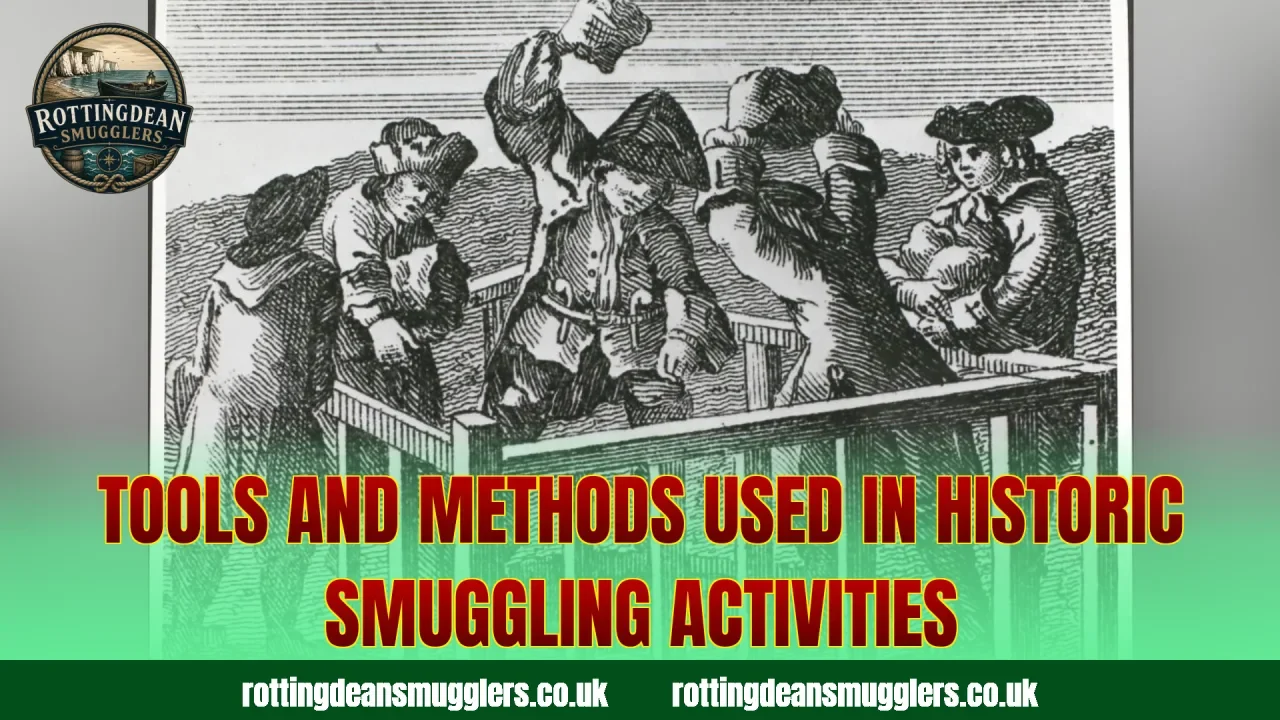
Contraband was typically landed on moonless nights, with rowing boats ferrying tubs of brandy from larger vessels anchored offshore. Tubmen — strong laborers hired specifically for this task — would carry two tubs at a time using specially designed harnesses, moving inland along pre-scouted tracks. The smuggling gangs of the South Coast coordinated these landings with military-like precision, using signal fires, lanterns, and coded messages to communicate across the darkness.
Hiding goods in plain sight
Once ashore, contraband needed to be concealed quickly before customs officers could respond. Church crypts, farmhouse cellars, hollow haystacks, and even coffins were used as temporary storage locations. The smuggling gangs of the South Coast understood that their greatest asset was the complicity of local communities, who benefited economically from cheap smuggled goods and had little reason to cooperate with underpaid government officials.
Violence as a business strategy
When stealth failed, many gangs turned to outright intimidation and violence to protect their operations. Revenue officers who interfered too aggressively were beaten, threatened, or in extreme cases killed — a grim reality that made law enforcement along the coast genuinely dangerous work. The smuggling gangs of the South Coast understood that a reputation for brutality served as its own deterrent, keeping informants silent and officials cautious.
| Gang name | Primary region | Active period | Main contraband | Notable event |
|---|---|---|---|---|
| Hawkhurst Gang | Kent and Sussex | 1730s–1747 | Brandy, tea, tobacco | Goudhurst battle, 1747 |
| Groombridge Gang | Sussex inland routes | 1720s–1740s | Tea, silk, spirits | London distribution network |
| Rottingdean Smugglers | East Sussex coast | Late 1700s–early 1800s | Brandy, lace, tobacco | Village-wide complicity network |
| Aldington Gang | Romney Marsh, Kent | Early 1800s | Spirits, silk | Linked to French intelligence |
The crackdown: How authorities fought back
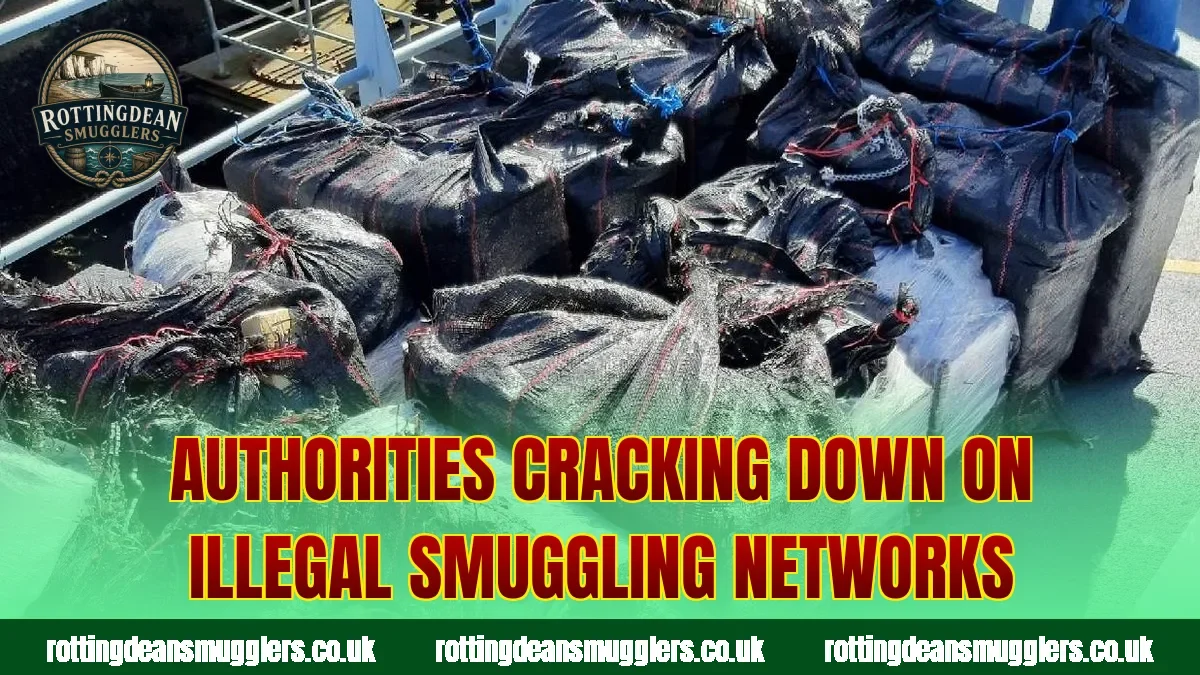
By the mid-eighteenth century, the scale of smuggling gangs of the South Coast had become a national embarrassment for the British government. Customs revenue losses were enormous, and the brazen violence of gangs like Hawkhurst made it clear that a serious response was needed. Parliament and the Crown eventually deployed significant resources to dismantle these networks, though success came slowly and at great cost.
The Riding Officers and their limitations
The primary law enforcement tool against smuggling gangs of the South Coast was the network of Riding Officers — mounted customs agents tasked with patrolling the coastline. However, these officers were few in number, poorly paid, and often outmatched by well-armed gangs who outnumbered them significantly. Corruption was also a persistent problem, with some officers accepting bribes rather than risking their lives in open confrontation.
Military intervention and the Preventive Service
As gang violence escalated, the government began deploying regular military units to support customs enforcement along the coast. The creation of the Preventive Water Guard in 1809 and later the Coastguard Service in 1822 marked a turning point in the battle against organized smuggling. These professional bodies brought greater resources and coordination to the fight, gradually making the business of smuggling gangs of the South Coast far more dangerous and less profitable.
Legal reforms that ended the golden age
Ultimately, it was economic reform rather than military force that truly broke the power of organized coastal smuggling. The sweeping tariff reductions introduced by Prime Minister William Pitt in the 1780s removed the financial incentive that had made contraband trade so attractive. When duties on tea were slashed dramatically, the profit margins that had sustained smuggling gangs of the South Coast for decades simply evaporated, and the golden age of English smuggling drew quietly to a close.
Conclusion
Smuggling gangs of the South Coast left a permanent mark on the history, folklore, and landscape of southern England, from hidden tunnels beneath village streets to tales still told in seaside pubs. Their story is one of ordinary people pushed into extraordinary lawlessness by economic hardship and government overreach, driven by profit, community loyalty, and a deep distrust of authority. To explore this history further, visit Rottingdean Smugglers and discover how one Sussex village kept its secrets for generations.
See more: Captain Nicholas Tettersell story — Royal Escape