Sussex coast privateers and smugglers shaped one of England’s most dramatic and secretive chapters in maritime history. From moonlit coves to hidden tunnels beneath coastal villages, the illicit trade that flourished along this shoreline was anything but ordinary. This article explores the bold raids, notorious gangs, legendary figures, and lasting legacy that defined centuries of defiance along the southern English coast.
Sussex coast privateers and smugglers: The wild origins
The story of Sussex coast privateers and smugglers did not emerge overnight — it grew steadily from economic pressure, government taxation, and the natural geography of the coastline itself. Steep chalk cliffs, hidden inlets, and isolated fishing villages created the perfect conditions for clandestine operations that thrived for over two centuries.
Why the Sussex shoreline became a smuggler’s paradise
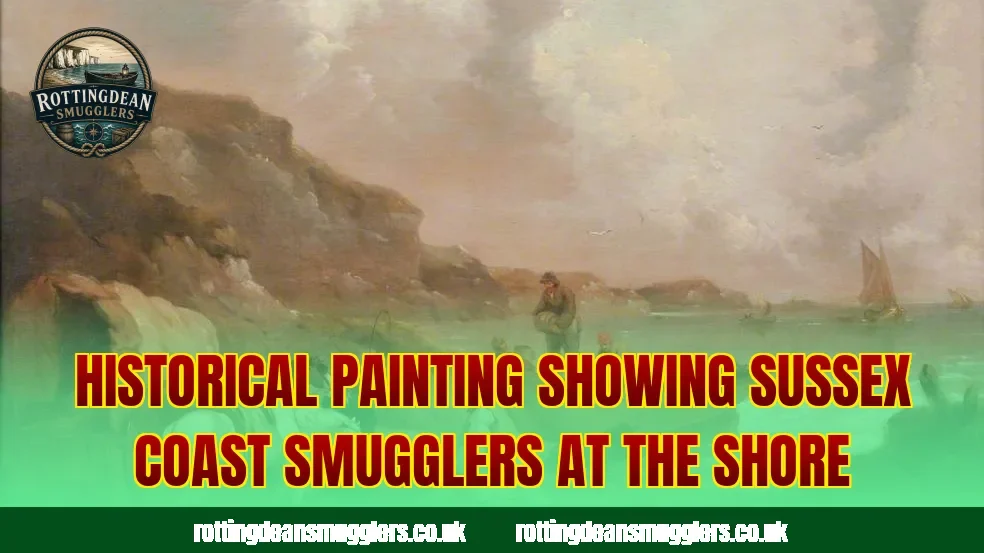
The geography of Sussex offered smugglers an almost unfair advantage over the authorities trying to stop them. Long stretches of beach, shallow coves, and dense woodland just inland made it easy to land contraband goods under cover of darkness without detection. Sussex coast privateers and smugglers quickly learned to exploit every natural feature of this landscape with remarkable precision and local knowledge.
Heavy taxation fueled the underground trade
Britain’s heavy import duties on goods like brandy, tea, tobacco, and silk during the 17th and 18th centuries made smuggling an economically rational choice for many coastal families. The profit margins were extraordinary — a single successful run could earn more than months of honest labor on the land or sea. This financial reality pushed ordinary men and women into the shadow economy that defined life along the Sussex shoreline for generations.
Local communities and their silent complicity
What made the smuggling networks so effective was not just the boldness of the runners but the widespread cooperation from local communities who benefited directly from cheap contraband goods. Farmers hid barrels in haystacks, innkeepers stored casks beneath floorboards, and even some clergymen turned a deliberate blind eye to the trade happening around them. The entire social fabric of many Sussex villages was quietly woven around the illicit commerce that Sussex coast privateers and smugglers brought ashore.
Sussex coast privateers and smugglers: Notorious gangs and raids
Organized criminal networks along the Sussex coast were far more sophisticated than most people imagine, operating with military-like discipline and ruthless efficiency. The gangs that controlled these trade routes were not petty criminals — they were powerful organizations capable of bribing officials, intimidating witnesses, and overwhelming customs officers with sheer force of numbers.
The Hawkhurst Gang: England’s most feared smugglers
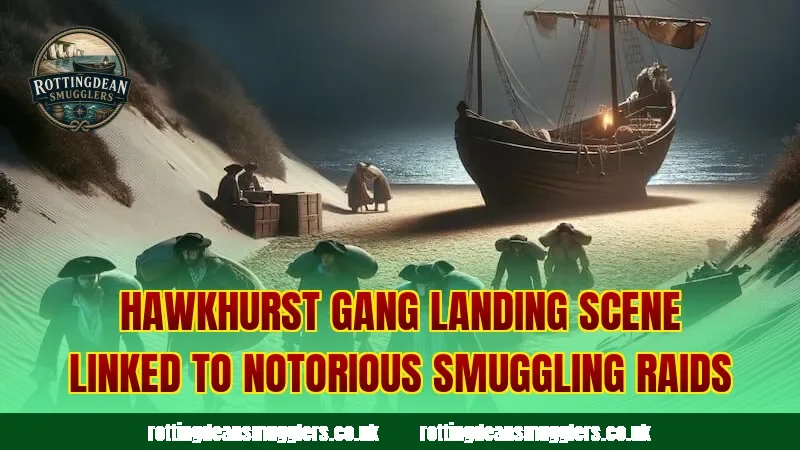
No discussion of Sussex coast privateers and smugglers would be complete without examining the Hawkhurst Gang, which operated from the 1730s to the 1750s across Sussex and Kent. At their peak, this gang controlled vast smuggling networks, terrorized local populations, and murdered anyone who dared inform on their operations. Their eventual downfall came after the brutal Goudhurst Massacre and the notorious Poole Customs House raid, which finally turned public opinion firmly against them.
Bold raids that shocked the entire nation
The 1747 Poole Customs House raid stands as one of the most audacious acts ever committed by smugglers on English soil, when a gang of over sixty armed men broke in to reclaim a seized cargo of tea in broad daylight. This brazen act of defiance demonstrated just how powerful and organized the smuggling gangs had become along the southern coast. The government’s response was swift and brutal, but it took years before the authorities truly gained the upper hand over the networks that Sussex coast privateers and smugglers had built.
Privateers who blurred the line between law and crime
Not all maritime raiders operated purely outside the law — privateers held official letters of marque from the Crown, authorizing them to attack enemy vessels during wartime. However, the boundary between licensed privateering and outright piracy was dangerously thin, and many Sussex-based seafarers crossed it freely depending on the season and opportunity. The dual identity of Sussex coast privateers and smugglers as both legally sanctioned raiders and criminal entrepreneurs made them uniquely difficult for authorities to prosecute or contain.
Hidden routes, tunnels, and legendary contraband trails
The physical infrastructure that supported the smuggling trade along Sussex was surprisingly elaborate, involving a network of routes, safe houses, and concealment points stretching from the shoreline deep into the English countryside. Understanding how goods moved from beach to market reveals just how organized and deeply embedded this trade had become in the regional economy.
Underground tunnels beneath Sussex villages
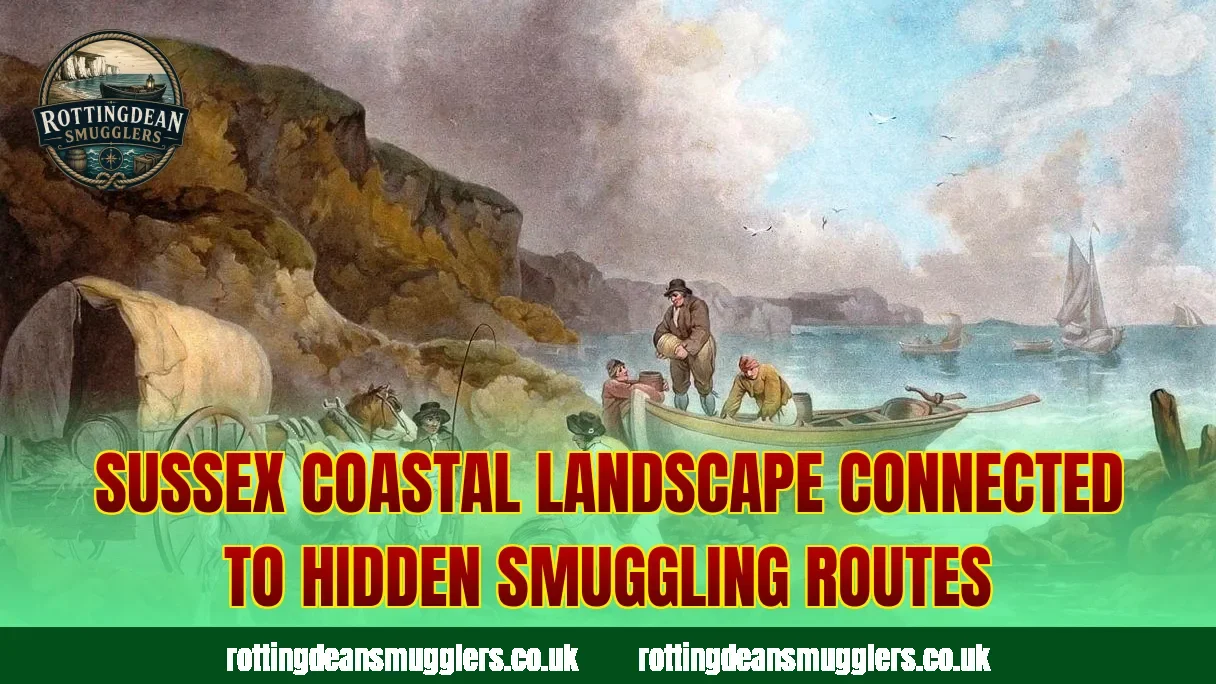
Many Sussex villages still contain tunnels and hidden chambers that were once used to store and move contraband goods away from the prying eyes of revenue officers. Rottingdean, Alfriston, and Birling Gap are among the most documented locations where Sussex coast privateers and smugglers maintained elaborate underground systems for concealing brandy kegs, tea chests, and bolts of lace. Some of these tunnels remain partially intact today, drawing historians and curious visitors who want to trace the physical remnants of this extraordinary underground economy.
The Alfriston gang and their inland network
The Alfriston-based Stanton Collins gang operated one of the most sophisticated inland distribution networks in the entire region, moving goods from the coast to London using a chain of trusted contacts and safe stopping points. Their leader, Stanton Collins, was eventually transported to Australia after his arrest in 1831, but the network he built had already operated successfully for decades. The scale of what Sussex coast privateers and smugglers achieved in terms of logistics and organization genuinely rivals some modern criminal enterprises in its complexity.
Coastguard battles and the cat-and-mouse pursuit
The British government’s response to rampant smuggling included the establishment of the Coastguard Service in 1822, which finally began to make a serious dent in the organized trade along the southern shores. Armed patrols, signal stations, and fast revenue cutters were deployed specifically to intercept landing parties before they could disappear into the countryside. Yet even with these measures in place, determined Sussex coast privateers and smugglers continued operating well into the 19th century, simply adapting their methods to stay one step ahead of the law.
| Gang / Figure | Active Period | Key Location | Notable Activity |
|---|---|---|---|
| Hawkhurst Gang | 1730s–1750s | Sussex / Kent border | Poole Customs House raid, murder of informants |
| Stanton Collins Gang | Early 1800s | Alfriston, East Sussex | Large-scale inland distribution network |
| Rottingdean Smugglers | 18th–19th century | Rottingdean village | Tunnel networks, coastal landings |
| Gabriel Tomkins | Mid-1700s | Chichester area | Informant turned smuggler, later executed |
| John Breads | 18th century | Rye, East Sussex | Murder and smuggling, public execution |
The cultural legacy left behind on Sussex shores
The impact of centuries of smuggling and privateering did not simply vanish when the trade declined — it left deep impressions on local culture, architecture, folklore, and even the landscape itself. From pub names to local legends, the memory of these daring men and women continues to shape how Sussex communities understand their own identity.

Folklore, songs, and the romanticized smuggler myth
Rudyard Kipling famously captured the romantic image of the Sussex smuggler in his poem “A Smuggler’s Song,” which warned readers to look away when the gentlemen came riding by with contraband goods. This romanticized vision of the trade has persisted in popular culture, often overshadowing the genuine violence, intimidation, and exploitation that accompanied real smuggling operations. Sussex coast privateers and smugglers became folk heroes in many communities precisely because they were seen as defying an unjust system of taxation on behalf of ordinary people.
Historic pubs and buildings still standing today
Numerous historic pubs, farmhouses, and barns across Sussex retain physical evidence of their former role in the smuggling trade, including concealed cellars, false walls, and priest holes repurposed for hiding contraband. The Tiger Inn at East Dean and the Mermaid Inn at Rye are among the most celebrated establishments with documented connections to the smuggling gangs that once controlled the local coastline. Visitors exploring these sites can still feel the atmosphere of an era when Sussex coast privateers and smugglers were a very real and powerful presence in everyday life.
Museums and heritage trails preserving this dark history
Today, several Sussex museums and heritage organizations actively work to preserve and interpret the smuggling history of the region for new generations of visitors and researchers. The Smugglers Adventure at St. Clement’s Caves in Hastings offers an immersive experience inside a genuine network of caves once used by smugglers to store their goods. These heritage efforts ensure that the true story of Sussex coast privateers and smugglers — including its darker realities — is not lost beneath the comfortable layer of romantic legend.
Conclusion
Sussex coast privateers and smugglers left behind a legacy that is equal parts thrilling, brutal, and deeply human — a story of ordinary people pushed into extraordinary circumstances by economic hardship and geographic opportunity. Their tunnels, legends, and hidden routes still echo through the villages and cliffs of the Sussex shoreline today. To explore this history further, visit Rottingdean Smugglers and discover the remarkable stories preserved from one of England’s most secretive coastal communities.
Xem thêm: Famous Smugglers Of Sussex | Rottingdean Smugglers