Dr Syn and Sussex smuggling lore is one of the most captivating intersections of fictional legend and genuine historical record along England’s southern coastline. The character of Dr Syn, created by author Russell Thorndike, draws heavily from the real-world smuggling culture that flourished in Sussex and Kent during the 18th century. This article unpacks the origins of that legend, the true history behind the smugglers who inspired it, and why this coastal folklore continues to fascinate historians and visitors alike.
Dr Syn and Sussex smuggling lore origins
The roots of Dr Syn and Sussex smuggling lore run deeper than most casual readers appreciate. Russell Thorndike first introduced Dr Syn in his 1915 novel, drawing on well-documented accounts of Sussex and Kent smuggling gangs that operated with remarkable boldness across the Romney Marsh region. The character blends pastoral respectability with outlaw cunning in a way that mirrors the real vicars and magistrates who, history records, often looked the other way — or actively participated.

Russell Thorndike and the birth of Dr Syn
Russell Thorndike wrote the first Dr Syn and Sussex smuggling lore novel while serving during the First World War, channelling the windswept Romney Marsh landscapes he knew from childhood visits. Dr Christopher Syn is portrayed as the vicar of Dymchurch, a pillar of the community by day and the masked smuggler known as the Scarecrow by night. This dual identity resonated so powerfully with readers that Thorndike went on to write seven novels in the series, each enriching the fictional mythology around the Sussex and Kent coasts.
Historical smuggling gangs that shaped the legend
The fictional world of Dr Syn and Sussex smuggling lore owes much to the very real Hawkhurst Gang, who terrorised the region between the 1730s and 1740s. This gang controlled smuggling routes across Sussex and Kent with extreme violence, bribing officials and intimidating whole villages into silence. Their documented exploits — including the infamous Goudhurst raid and the brutal murder of customs officer William Galley — gave Thorndike and later writers a factual canvas that needed little embellishment to feel dramatic.
Romney Marsh as the landscape of outlaws
No exploration of Dr Syn and Sussex smuggling lore is complete without understanding Romney Marsh itself. This flat, foggy expanse of reclaimed land stretching across the Sussex-Kent border provided perfect cover for contraband runners, with its maze of drainage ditches, isolated hamlets, and unpatrolled shoreline. Local communities depended on the smuggling trade for goods like brandy, tea, and silk that were otherwise taxed beyond reach, creating a culture of tacit complicity that gave the Scarecrow legend its moral ambiguity.
Dr Syn and Sussex smuggling lore across culture
The influence of Dr Syn and Sussex smuggling lore has extended far beyond the original novels, shaping how popular culture portrays the English smuggling era. Two major film adaptations — Walt Disney’s 1963 television production and the British Hammer film released the same year — brought the Scarecrow to international audiences, cementing the image of the gentleman outlaw as a specifically Sussex and Kent archetype. The legend has since influenced theatre, local festivals, and countless historical walking tours along the coast.
Film adaptations and the Scarecrow’s enduring appeal
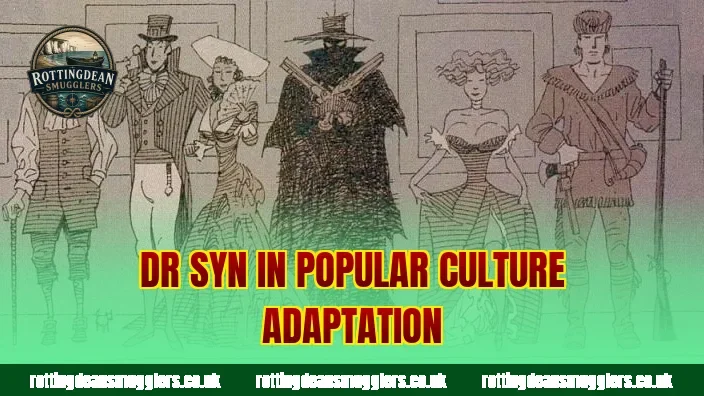
The dual 1963 film productions around Dr Syn and Sussex smuggling lore are a remarkable footnote in cinema history — two studios released competing adaptations of the same character in the same year. Disney’s version, titled *Dr Syn, Alias the Scarecrow*, starred Patrick McGoohan and leaned into the adventure serial format, while the Hammer version with Peter Cushing took a darker tone. Both films drew extensively on the authentic landscapes of the Sussex and Kent coasts, reinforcing the regional identity tied to this outlaw mythology.
Dymchurch festival and living heritage traditions
The town of Dymchurch in Kent holds a biennial Day of Syn festival that directly celebrates Dr Syn and Sussex smuggling lore through costumed processions, mock battles, and community theatre. This event has grown into one of the most distinctive heritage festivals in southern England, drawing visitors who are drawn both to the Thorndike fiction and to the genuine 18th-century history it references. The festival demonstrates how fictional legend and documented regional history can become practically inseparable in living community memory.
Influence on Sussex coastal walking culture
Guided heritage walks exploring Dr Syn and Sussex smuggling lore have become a cottage industry along the Sussex and Kent coastline, connecting sites like Rye, Winchelsea, Rottingdean, and Romney Marsh into a single narrative trail. These walks typically blend documented historical sites — old smugglers’ cellars, coastal watch stations, and smuggling tunnels — with the fictional geography Thorndike invented for his novels. The result is an immersive form of heritage tourism that keeps both the real history and the literary legend alive in the landscape itself.
Sussex smuggling history beyond the fiction
While the Dr Syn novels provide an entertaining entry point, the true history of smuggling along the Sussex coast deserves examination on its own terms. The 18th-century smuggling trade was not a romantic sideshow but a significant economic and social force, estimated to have supplied more than half of England’s tea and brandy at its peak. Understanding the real networks, risks, and community structures behind that trade gives the fictional world of Dr Syn and Sussex smuggling lore considerably more weight and resonance.
The economics of 18th-century coastal contraband
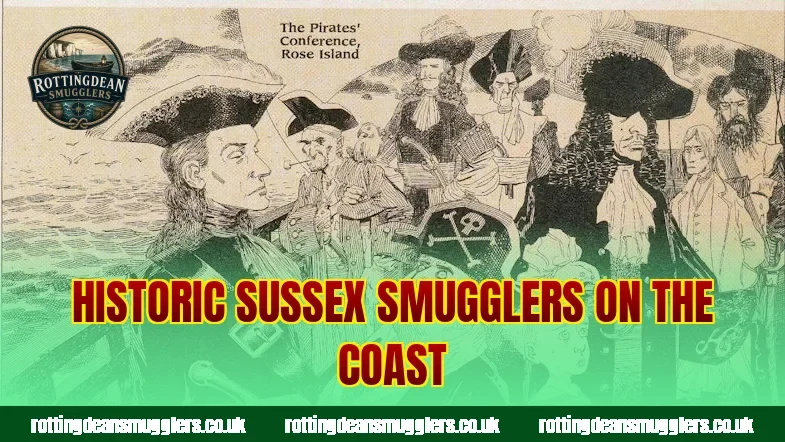
The smuggling economy that inspired Dr Syn and Sussex smuggling lore emerged directly from punishing government taxation on imported goods following the wars with France. Duties on tea, spirits, tobacco, and lace made legitimate purchase impossible for ordinary people, creating massive demand for contraband supply chains running from the French coast to Sussex beaches. Historians estimate that organised gangs employed hundreds of men per run — from French suppliers and boat crews to inland carriers and lookouts — making smuggling one of the region’s primary employers.
Women, clergy, and complicity in smuggling networks
The world behind Dr Syn and Sussex smuggling lore was not exclusively male or criminal in the conventional sense. Parish records and court documents from the period show women actively involved in storing and distributing contraband, while several Sussex clergymen were investigated for harbouring smugglers or accepting goods as payment for silence. This widespread social complicity is precisely what makes the Dr Syn archetype — the smuggling vicar — feel historically credible rather than merely fantastical.
Preventive officers and the brutal reality of enforcement
The customs service that the smugglers of Dr Syn and Sussex smuggling lore outwitted was understaffed, underpaid, and frequently outgunned. Preventive officers working the Sussex coast faced gangs that numbered in the hundreds on major runs, and fatalities on both sides were common. The Blockade Service, established in 1817 specifically to combat Channel smuggling, eventually succeeded in breaking the major gangs, but not before decades of violence that included the murder of numerous revenue men whose stories are as dramatic as anything in the Thorndike novels.
| Element | Fictional (Dr Syn) | Historical (Sussex/Kent) |
|---|---|---|
| Leader figure | The Scarecrow (Dr Syn) | Arthur Gray, Hawkhurst Gang leaders |
| Primary goods | Brandy, silk, general contraband | Tea, brandy, tobacco, lace |
| Operating region | Romney Marsh, Dymchurch | Sussex coast, Kent, Romney Marsh |
| Community role | Respected vicar, secret outlaw | Local landowners, clergy, tradesmen |
| Period depicted | Late 18th century | 1700s–1830s |
| Enforcement opposition | Revenue men, dragoons | Customs officers, Blockade Service |
Conclusion
Dr Syn and Sussex smuggling lore represents a rare and richly layered confluence of literary invention and verifiable regional history, where a fictional vicar-turned-outlaw illuminates the genuine economic desperation and community resilience of 18th-century coastal England. The legend endures not because it romanticises crime but because it captures something true about how ordinary communities survive under extraordinary pressure. To explore this history further, Rottingdean Smugglers offers a compelling gateway into the real smuggling heritage of the Sussex coast.
Xem thêm: Smuggling gangs of the South Coast – Rogue Outlaws